Sea Change Project Presents

Stories, news, and journals from the seaforest.

Latest

Crustaceans in the spotlight at first meeting in Africa

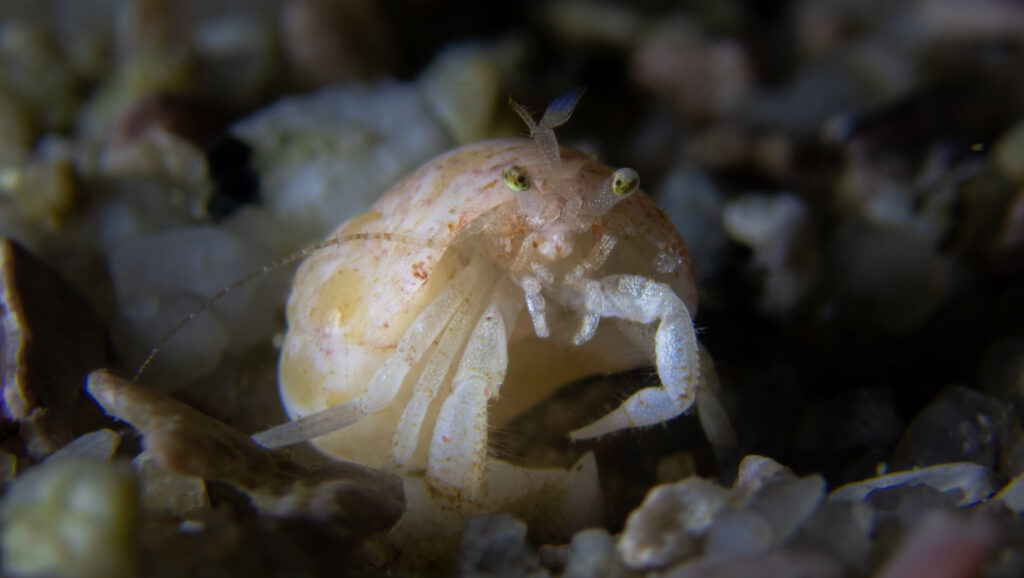
From tiny amphipods navigating the kelp fronds to rock lobsters scuttling along the reefs, crustaceans are the seaforest’s great connectors. South Africa alone has described more than 13,000 marine animals, of which over 2,300 are Crustacea.
Read Now

The Great African Seaforest finds its TIME

Kelp forests are on the cover of TIME magazine – a first in the publication’s 103-year history. The Great African Seaforest, one of the most biodiverse and least-known ecosystems on the planet, is now in front of a global audience.
Read Now

Explore the Kelp Species of the Great African Seaforest

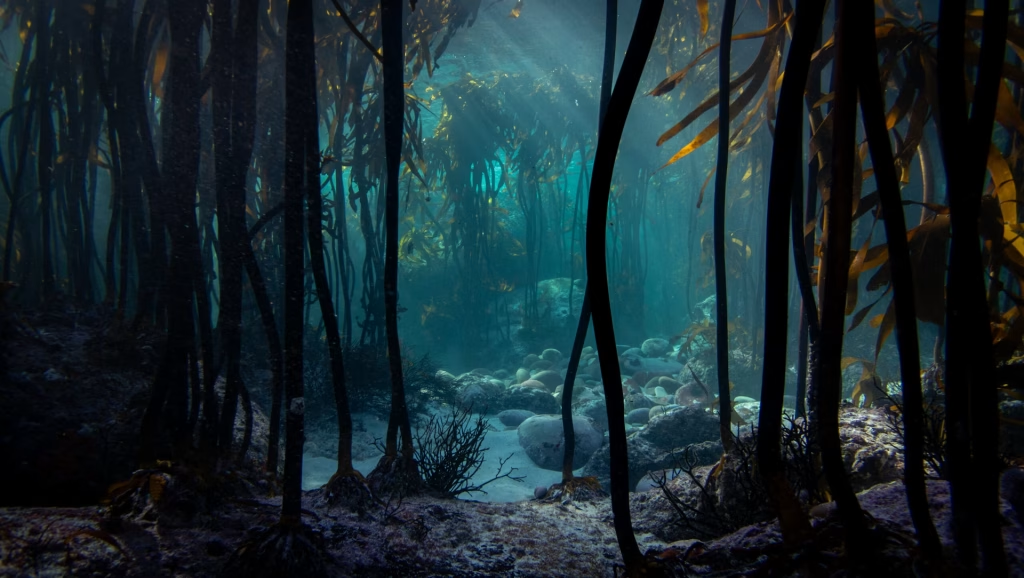
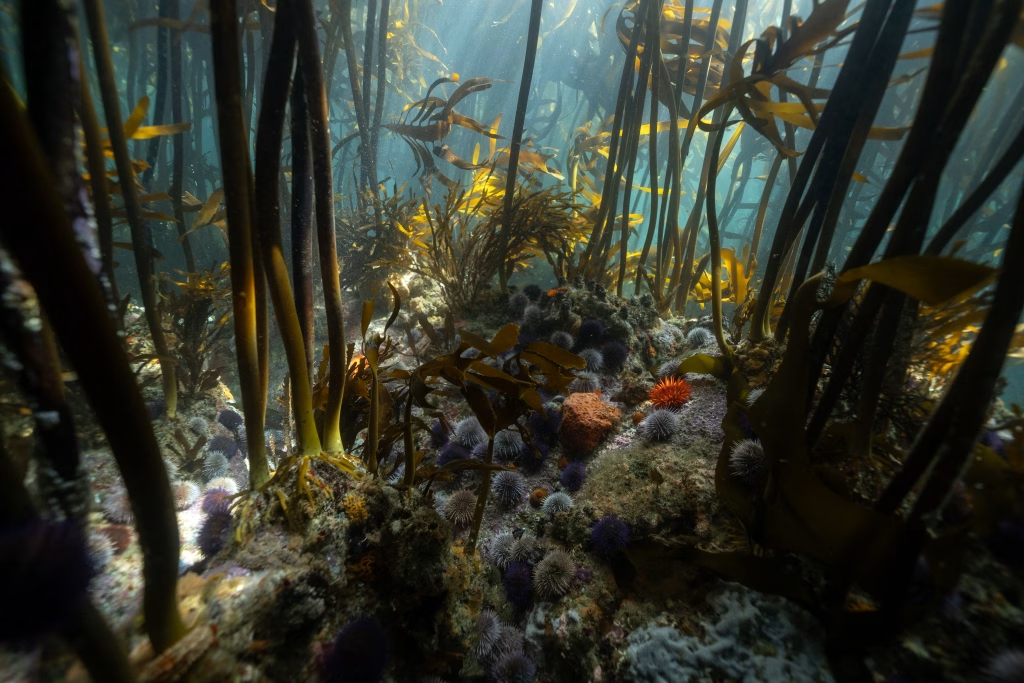
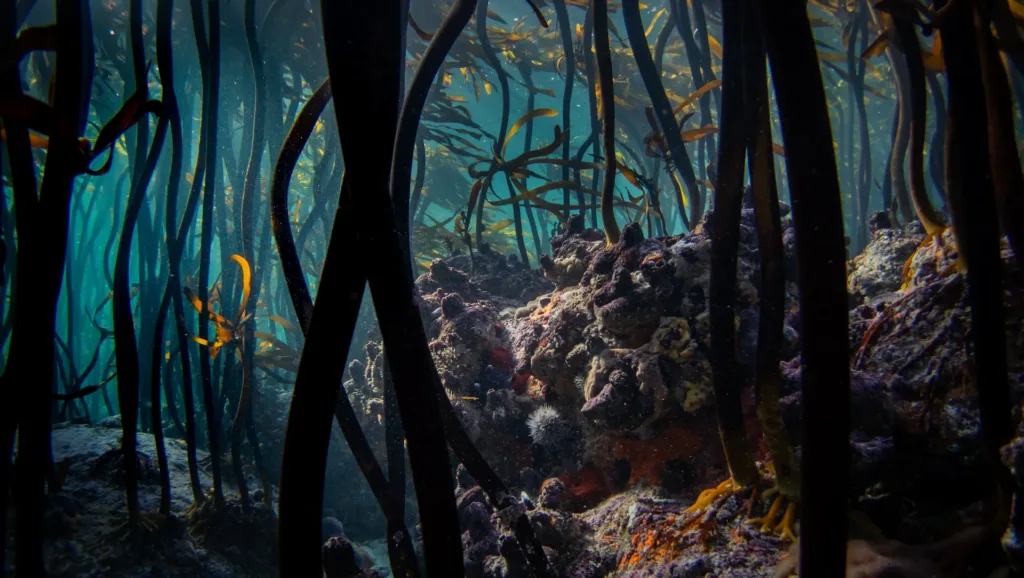
Three kelp species — Sea bamboo, Split-fan and Bladder kelp — form the Great African Seaforest, a 1000km biodiversity engine that shelters marine life, sequesters carbon and protects coastlines from waves.
Read Now

Recent

Beyond Seaweed: Why Kelp Forests Are Vital to Life on Earth

Kelp forests support extraordinary ocean biodiversity and sequester carbon like terrestrial forests, yet over 60% have degraded. Darwin compared these vital ecosystems to tropical rainforests — and they deserve equal protection.
Read Now

A Slow Remembering

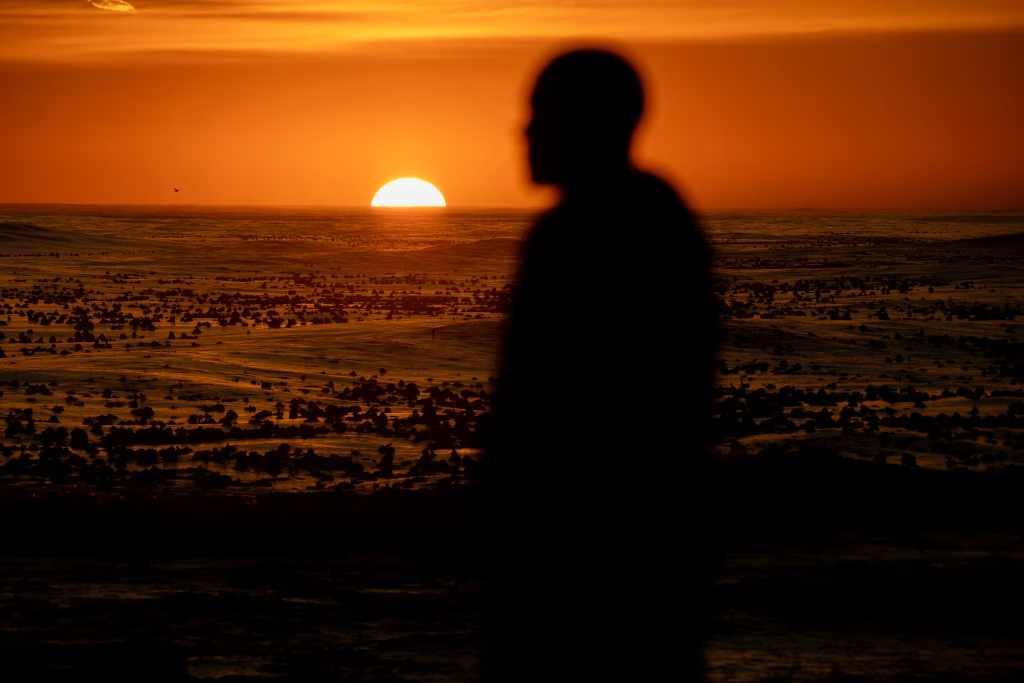
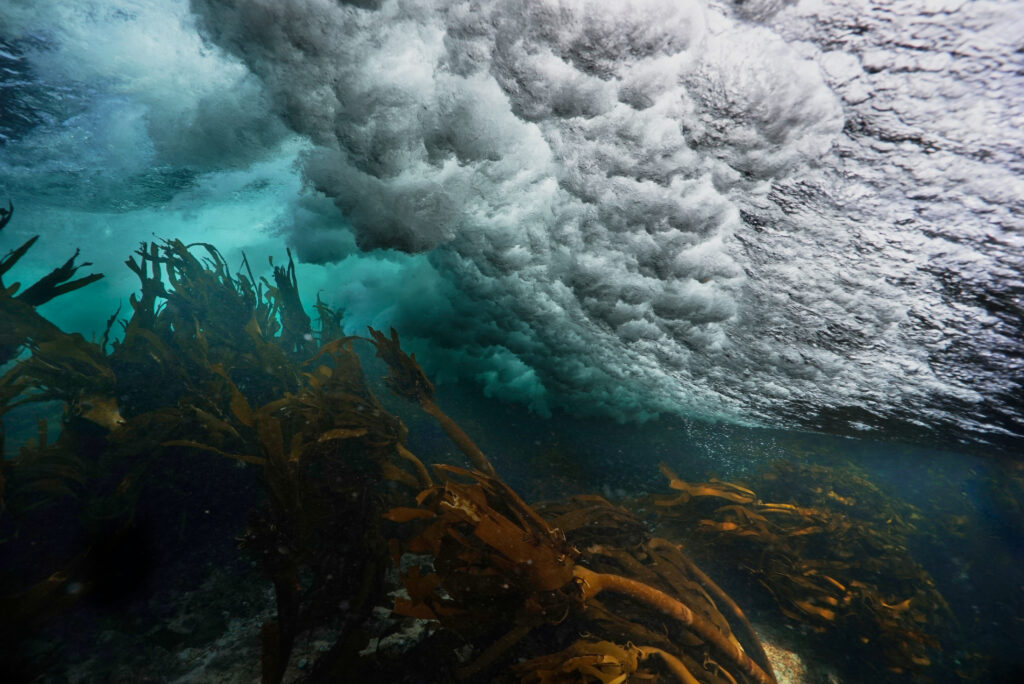
There is a silence growing between us and Mother Earth. In South Africa, we spend nearly 10 hours a day online – more than any other nation – replacing wonder and wildness with the glow of screens. But through tracking and observation, young people are healing this rupture. At Windmill Beach, learners are rediscovering the ocean through the 1001 Seaforest Species project, studying intertidal creatures and learning Earth’s oldest language. Meanwhile, at !Khwa ttu, San interns reconnect with their ancestral knowledge, reading the shoreline and tracking animals, wind, and memory.
Read Now

On Assignment for People and the Planet

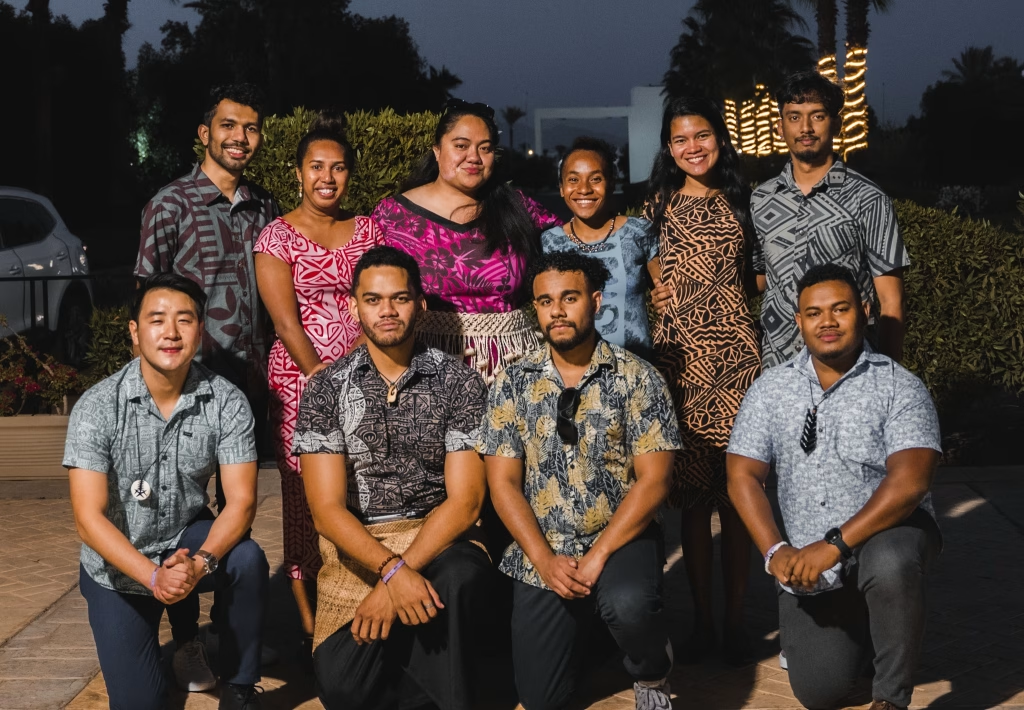
How the Pacific Islands Students Fighting Climate Change took a classroom idea to the world’s highest court.
Read Now

What’s Your Name?

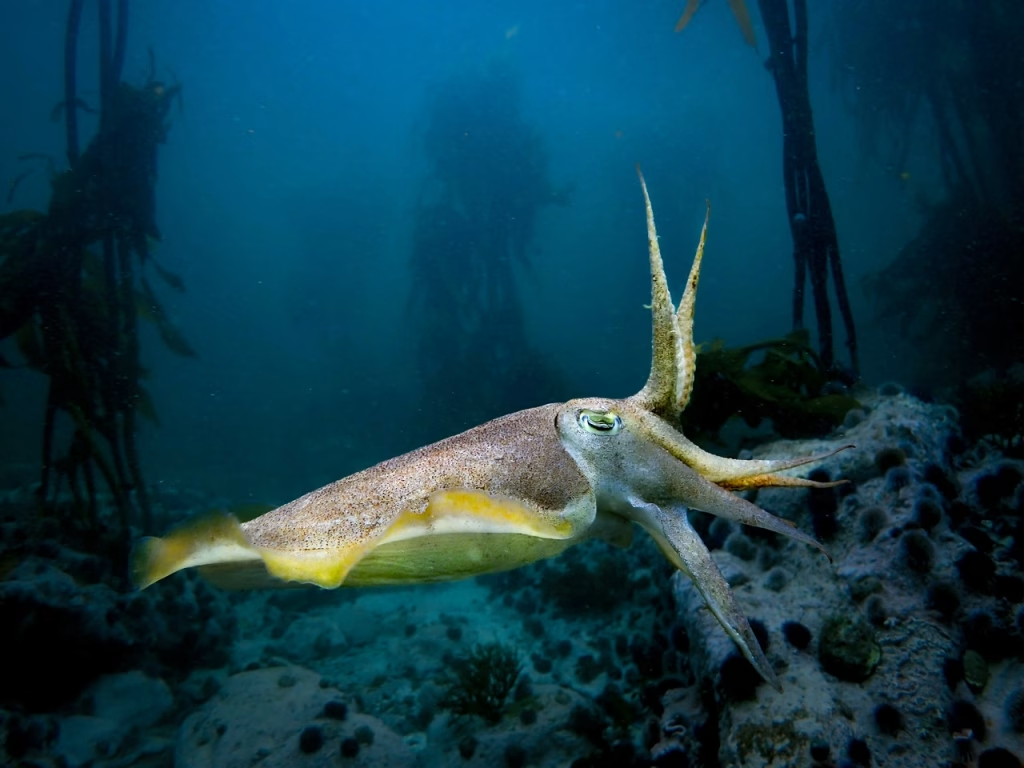
A surprising discovery in South Africa’s kelp forest reveals the true identity of a cuttlefish – and why naming species correctly matters.
Read Now

When Words Fail Us, We Fail Nature

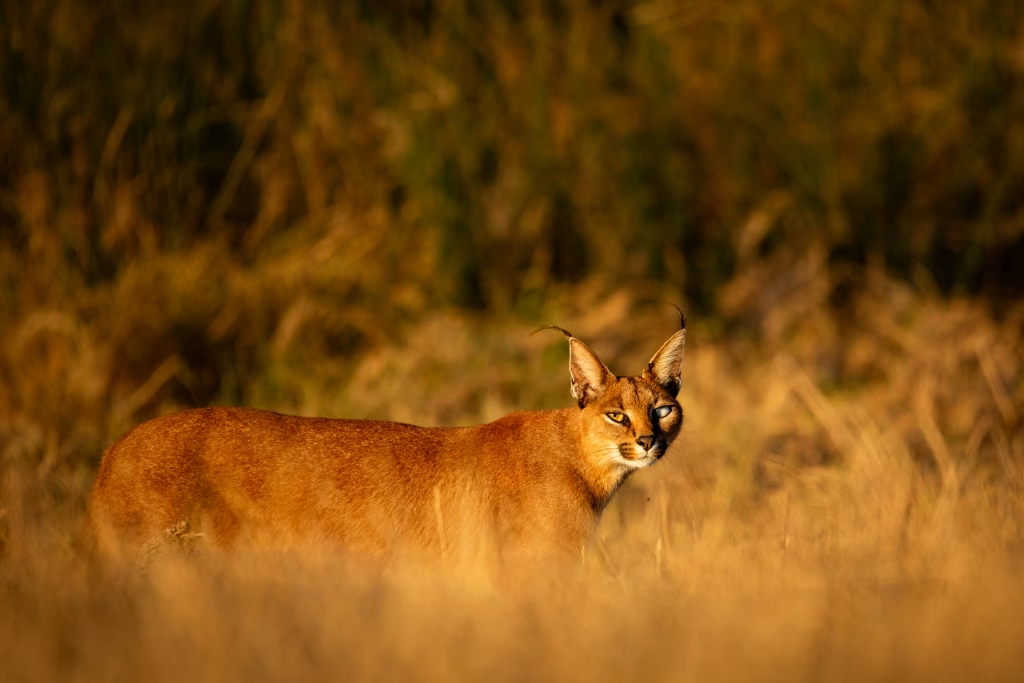
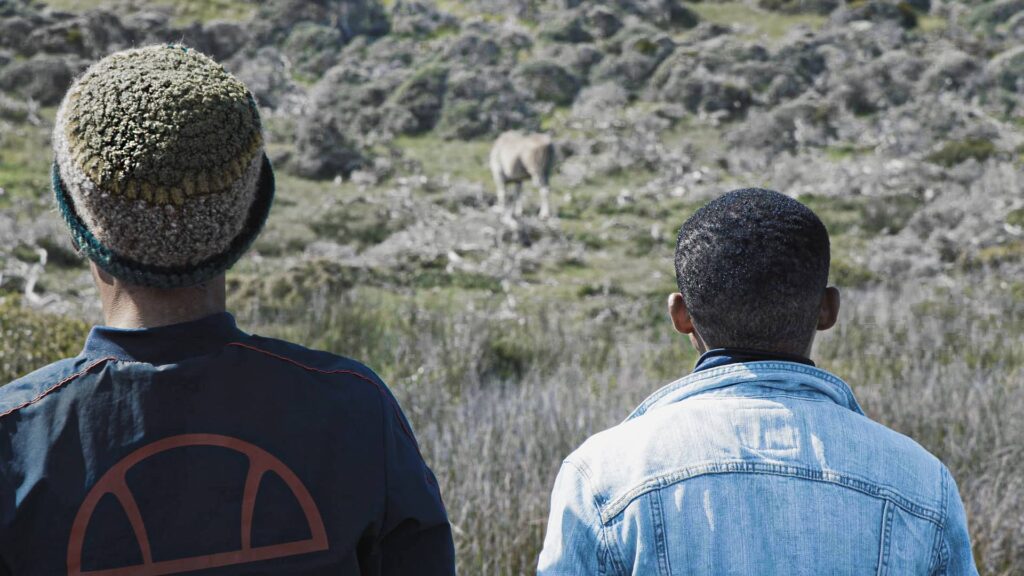
Tracking a caracal along the shoreline reveals how we’ve lost the “language of the wild” – and why reclaiming it is key to nature connection and conservation.
Read Now

Did UNOC3 Make Waves Or Just A Splash?

The Sea Change Project reflects on its first time attending the United Nations Ocean Conference (UNOC3) in Nice, where kelp forests gained long-overdue political recognition. From inspiring side events to landmark pledges for marine protection, the week sparked renewed hope, connection, and commitment to our blue planet.
Read Now

Two Creatures Turning Our Thinking Upside-Down

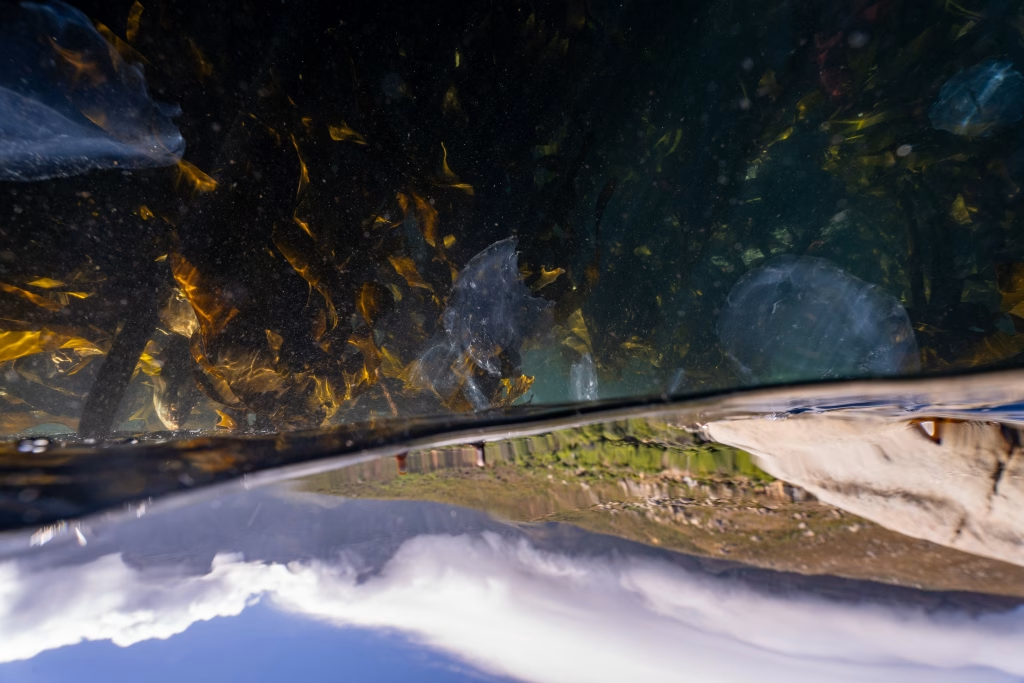
Jannes Landschoff and Craig Foster share their encounters with two fascinating marine creatures – an upside-down amphipod and a juvenile Cape sole – that challenged their understanding of the underwater world and highlighted the ocean’s enduring mysteries.
Read Now

Fallacies and Facts About Our Feverish Planet

Our planet has a fever. It’s sweating and sick. Last year was the hottest year on record, with average temperatures rising past the 1.5ºC threshold agreed upon by the 195 signatories to the Paris Agreement.
Read Now

On Board for The Ocean

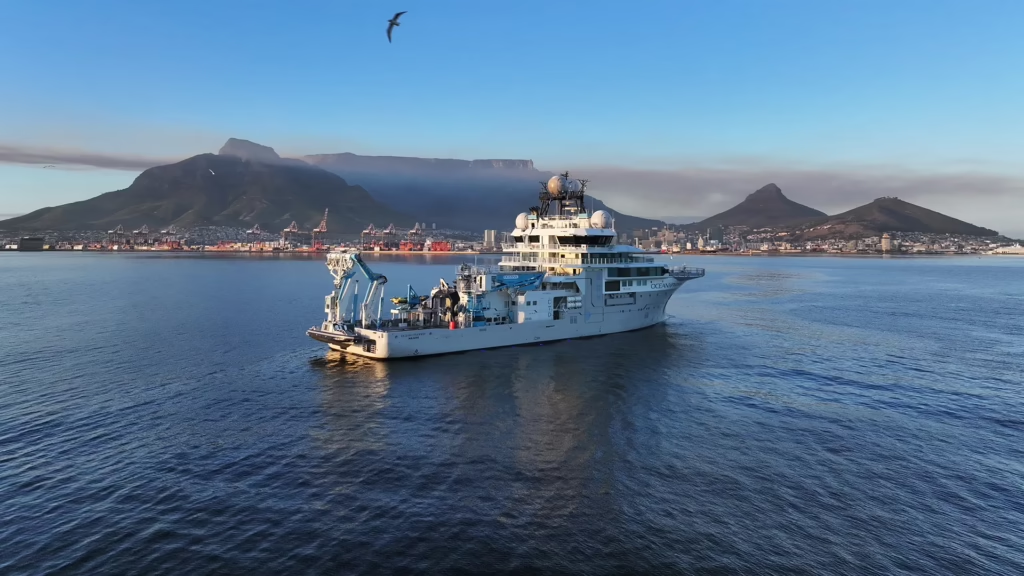
The OceanXplorer is a remarkable vessel. Part dive centre, part science laboratory, part media hub, part every-child’s-dream, it travels the world researching our oceans and has explored uncharted deep-sea ecosystems. It’s high-tech and high-impact, and that evening’s gathering was high-level.
Read Now

How do we love thee? Let us count the ways

Sea Change Project marine biologist Jannes Landschoff explains how the 1001 Seaforest Species project aims to create a sense of awe for biodiversity.
Read Now

Chewing Gum and Bird Spas:
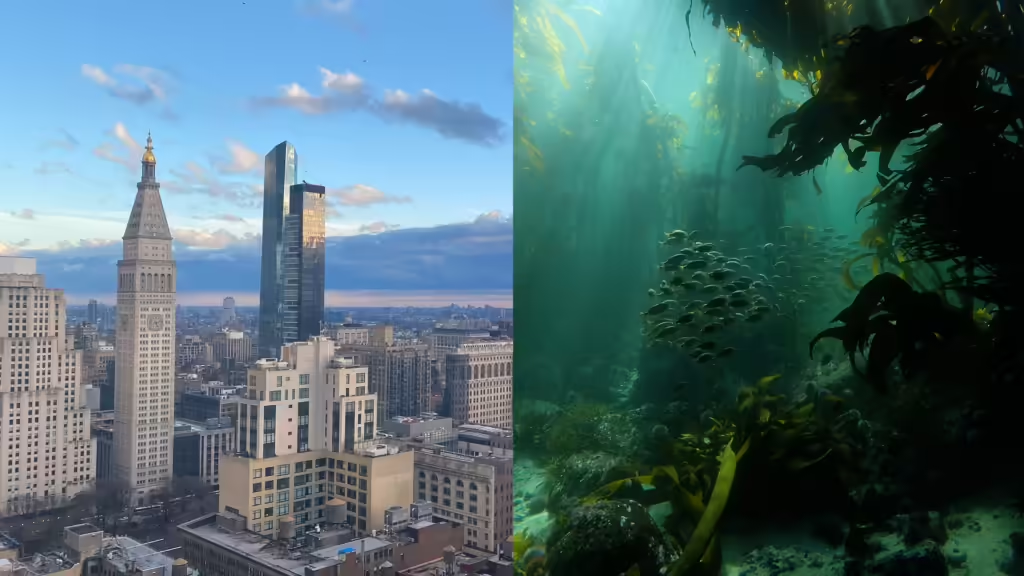
A Tracking Tale of Two Cities

When Craig travels to London and New York, he feels out of place – until he discovers that a wild mind can still thrive in a tame world.
Read Now

Home is Everywhere, Everywhere is Home

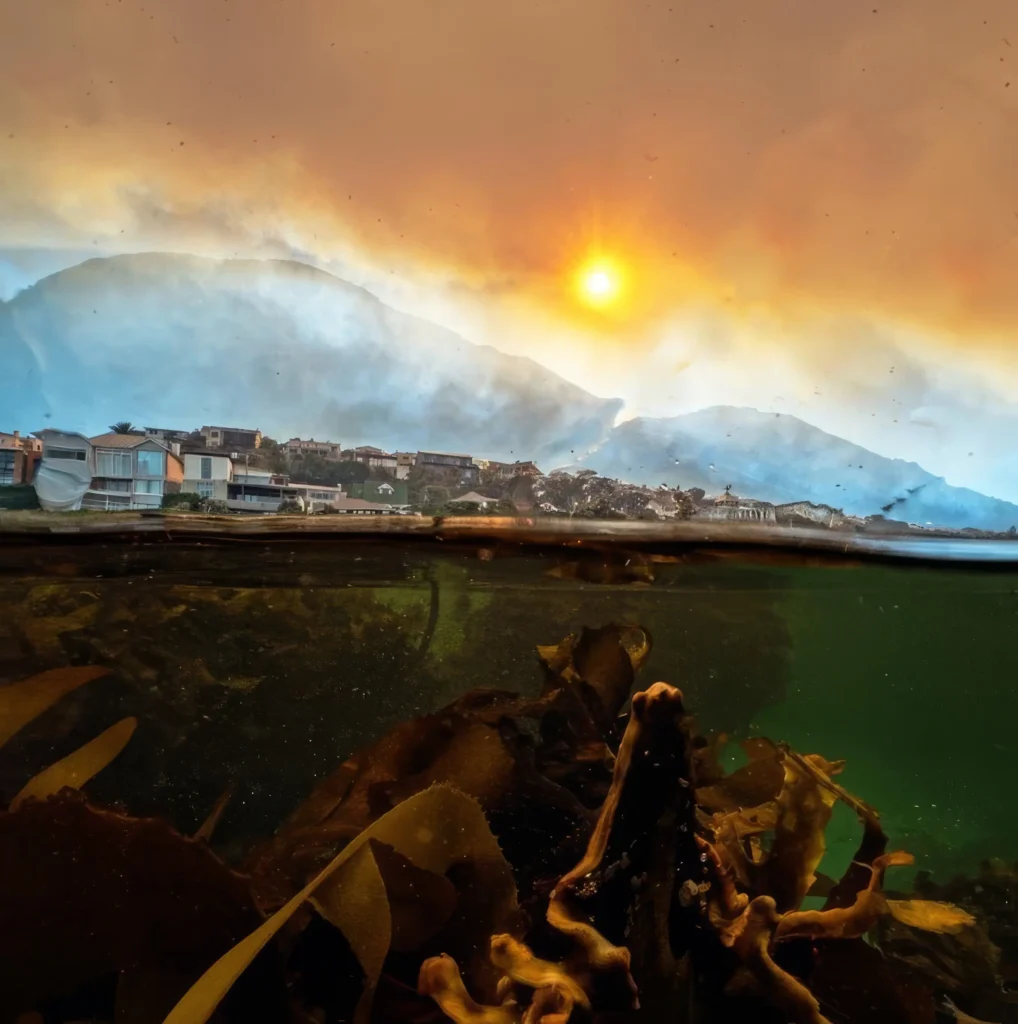
I watched the mountainside writhe in orange. Stark against the deepening sky, the dance of fire looked deadly and unavoidable. Heroic efforts by helicopters and firefighters wrestled the great beast down, only for it to start ravening on the next range a few miles over. This deadly waltz of fire and firefighters continued for ten days in the fag-end of 2023. Thankfully, there was no loss of human life or property.
Read Now

‘Nature is my mentor’ – a journey from despair to deep connection

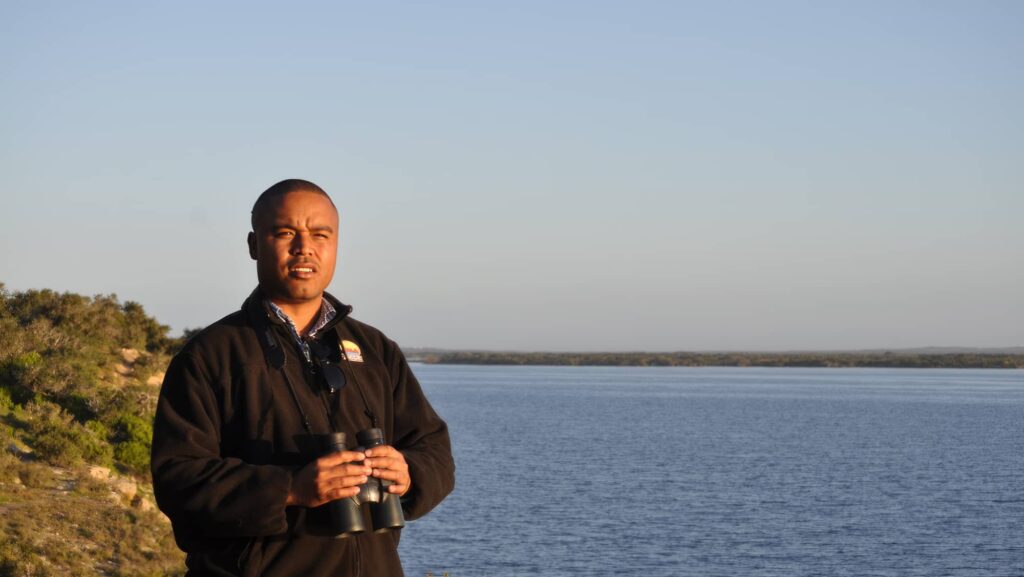
Life wasn’t always easy for Dalfrenzo Laing. His family struggled to make ends meet, he dabbled in drugs, took on menial work, and often felt hopeless. But a chance meeting and a deep love of nature transformed his life, and he now spends his days armed with binoculars and an encyclopaedic knowledge of marine and terrestrial life, living with passion and purpose.
Read Now

Earth’s Tongues: Rekindling the Language of Tracking to Spark Connection

We were all forged in the great crucible of the African continent. We are all African by nature, having spent 80 percent of our time as a species here, living in deep reciprocity with nature, each footfall an echo of all animals and insects, plants and oceans.
Read Now

Celebrate South Africa’s Marine Protected Areas With Us

The Great African Seaforest is home to thousands of species, some that have not yet even been scientifically named and every time you set foot in the kelp forest you are opening yourself up for an experience that you cannot predict.
Read Now

Unboxing the Treasures of Collaboration

Read Now

How Kelp Provides Life

You can see it when you stand on the shore around Cape Town: the Great African Seaforest. What you see is a narrow stretch of floating Bamboo kelp (Ecklonia maxima). It is one of the few kelp species in the world that grows to the surface at low tide. But what you see at the top is just the tip of the iceberg!
Read Now

The Sunken Stories and Ancient Wisdom of the Great African Seaforest

When we originally formed SCP it was a way for us to produce the occasional creative project while immersing ourselves in the kelp forests which we named the Great African Seaforest. As a group we realised that by giving our kelp forests a name we were giving it an unique identity and a presence that connected it to the kelp forests of the world, but also distinguished it as a particular ecosystem found on the shores of Southern Africa.
Read Now
Join the Sea Change Community

By signing up for the newsletter, you agree to the Terms and Conditions.

be first to receive our stories
Join the Sea Change Community

By signing up for the newsletter, you agree to the Terms and Conditions.