Our Mission
Storytelling for Nature Preservation
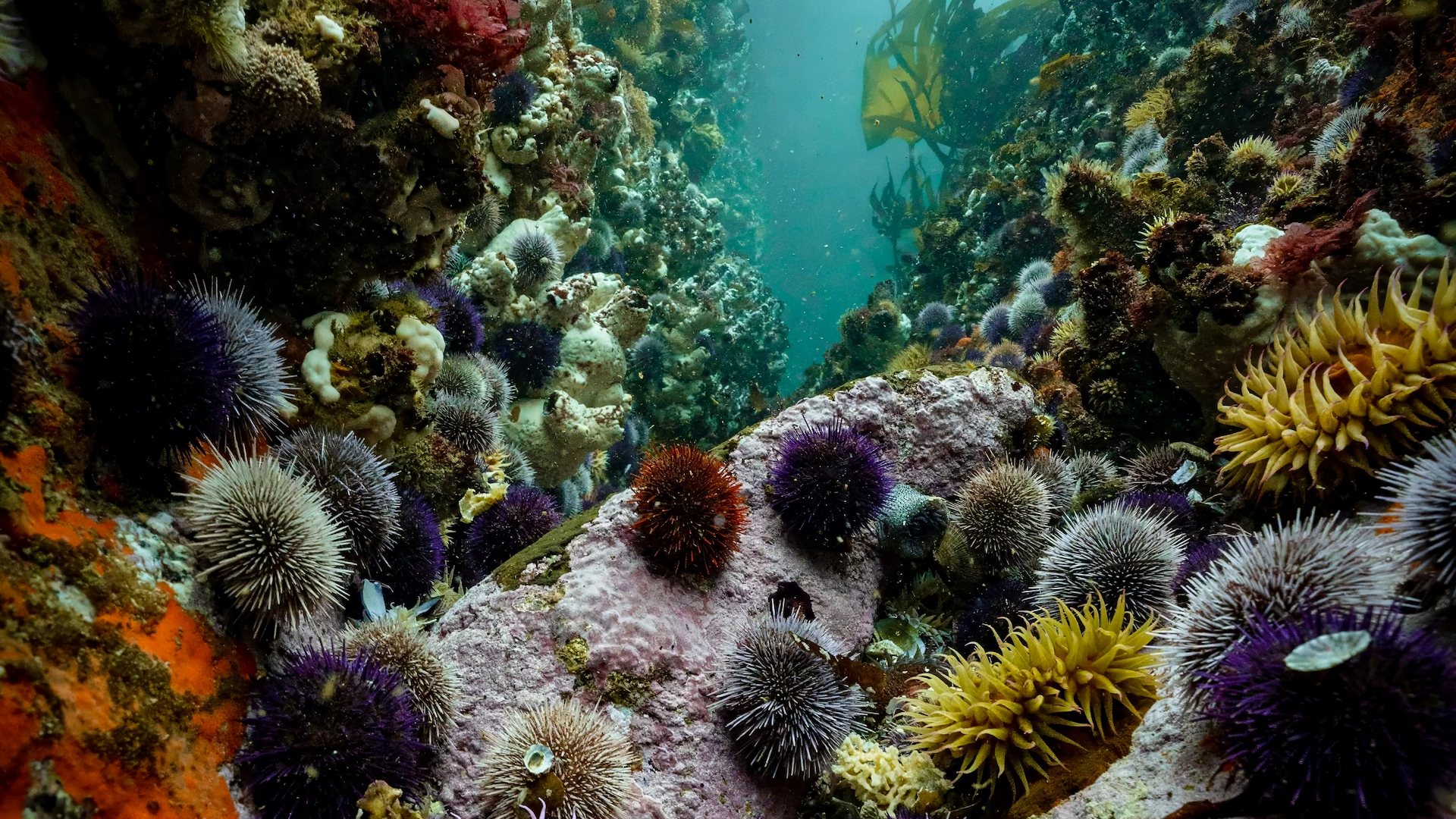
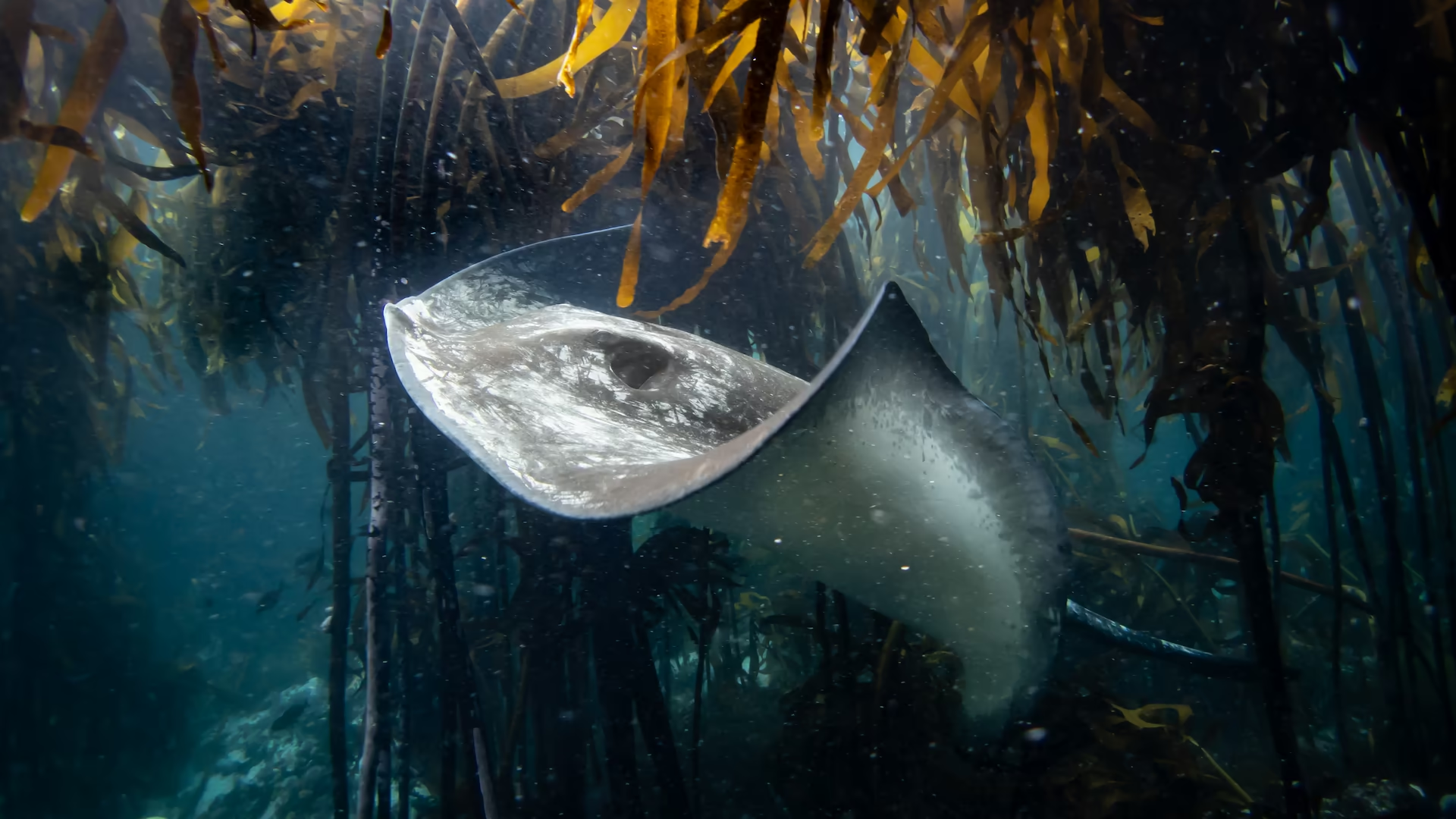
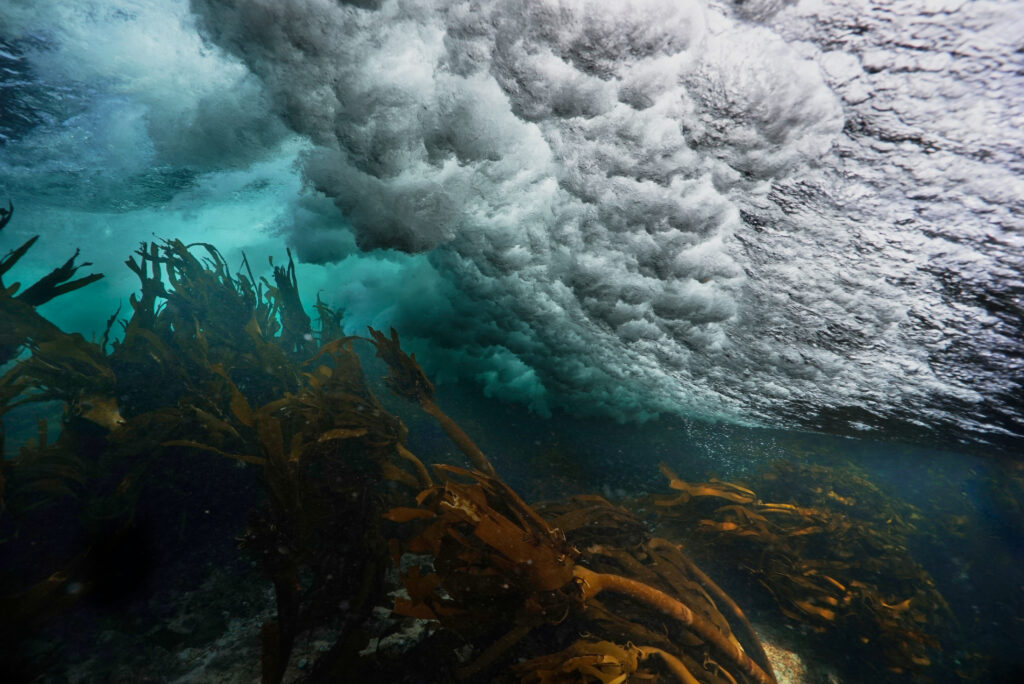
We are a community of scientists, storytellers, journalists and filmmakers who are dedicated to the wild, and specifically the Great African Seaforest.
We advocate for the healing of our planet by connecting people to nature through our science-based immersive storytelling.
“I need no convincing that an ecosystem such as this is of inestimable value & must be protected.”
SIR DAVID ATTENBOROUGH
Our Projects
Inspired by Nature
Supported by Science
Guided by Indigenous Wisdom
All our work is based on our connection to the Great African Seaforest. This underwater forest is a deep source of inspiration for our minds, souls and hearts. By sharing these experiences with the world, we hope to inspire a global movement of nature connection and more stories about the intrinsic relationship between humans and the living planet.
Films
World-class films are an integral part of our content. We tell immersive, personal stories about people and nature, to a global audience. Our films include the Netflix Original My Octopus Teacher; Older than Trees – a film about the future of sharks and rays, and our newest feature documentary Pangolin: Kulu’s Journey about a special baby pangolin.
Books
Our Sea Change book has been republished as Underwater Wild, and we released a children’s book, A Journey Under the Sea. Craig Foster’s new book Amphibious Soul about “Finding the wild in a tame world,” based on his own ‘rewilding,’ is available to purchase.
Exhibitions
Sea Change Project collaborates on multimedia exhibitions that convey the story of our interconnectedness with the natural world. Showcasing the latest research on the origins of Homo sapiens while raising awareness for the Great African Seaforest and kelp forests worldwide. Visit the Origins exhibit at Cape Point, De Hoop Nature Reserve and most recently at Stillbaai.
Education
Having a connection to nature is everyone’s birthright. It is often said we must leave a better planet to our future children but we need to also leave better children to become custodians of this living world and for that we need nature education. We are committed to sharing our love and knowledge of the Great African Seaforest, and nature as a whole, with as many people as we can reach to inspire a sea-change.
Science
Science guides all our work at Sea Change. We conduct biodiversity research and collaborate with academic institutions to uncover the secrets of the Great African Seaforest. Through our 1001 Seaforest Species project, you’ll encounter the extraordinary creatures of this underwater ecosystem and discover their remarkable stories. This project blends science, underwater tracking, and storytelling to illuminate the hidden world of the Seaforest.
Podcasts
Our podcast series Back to the Water, hosted by Zolani Mahola and Pippa Ehrlich, asks what it means to be disconnected from nature and one’s culture – and what happens when you reconnect. The first episode of Back to the Water, “More Than One Octopus” premiered at Tribeca Festival, winning in its category, and available on all podcast platforms.
PATRON & AMBASSADOR
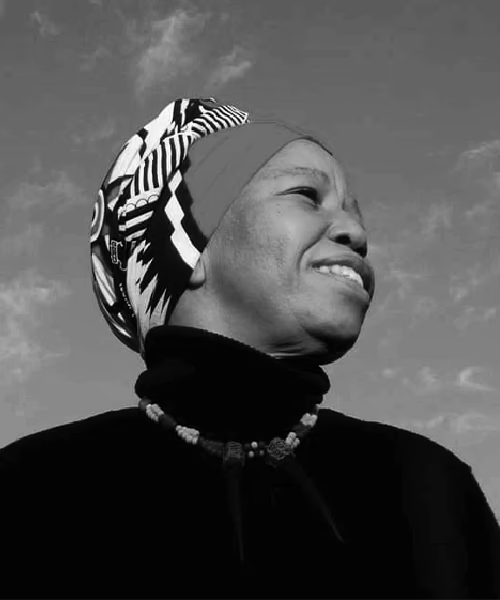
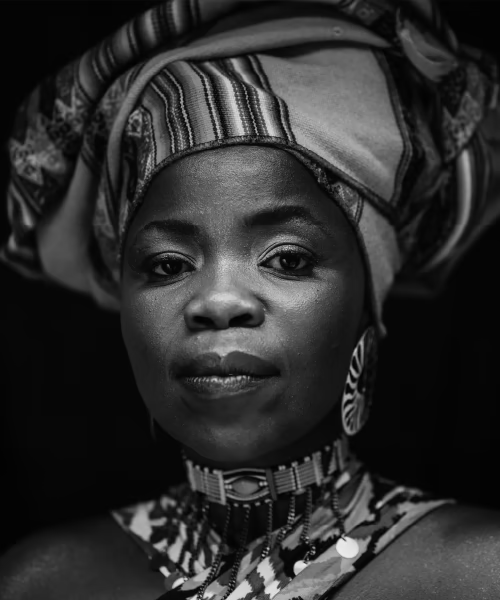
Zolani Mahola
Vocalist, Actress & Nature Activist
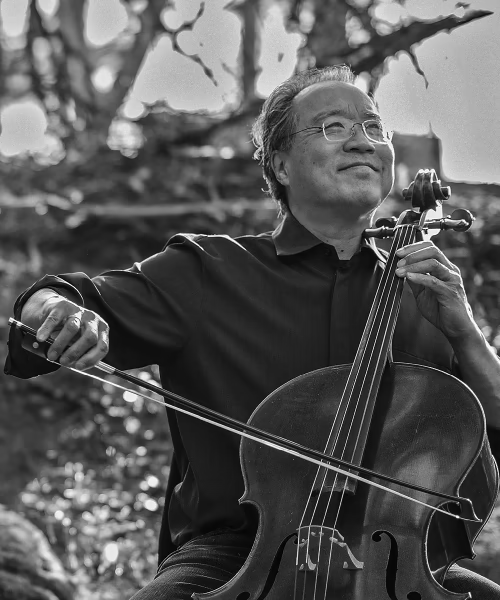
Yo-Yo Ma
Cellist
YOU CAN MAKE A DIFFERENCE
Preserve the Great African Seaforest
Kelp forests are highly productive near-shore marine ecosystems. They are biodiversity hotspots, sequester carbon, release oxygen and slow coastal erosion. They are found on 30% of our world’s coastlines and are one of the most vulnerable marine ecosystems to the climate emergency.
Our first goal was to make the Great African Seaforest a global icon and bring attention to the world’s kelp forests. With your help and support following the success of My Octopus Teacher, we achieved this.
In this time of environmental upheaval and biodiversity loss, we need to keep ensuring the long-term preservation of the Great African Seaforest. You can help by continuing to support our work in reminding people of their intrinsic connection with nature.
WHAT YOU CAN DO
Take Action
Lack of knowledge and awareness, and our human impact on this planet, are at the root of all threats to the Great African Seaforest and our global kelp forests. We are in the ocean every day, learning the secrets of the seaforest and finding stories that inspire people to reconnect with nature.
We hope our stories, knowledge and love of this environment can remind us that we are part of the natural world and motivate action that allows the living planet to thrive and regenerate itself.
To help us ensure the long-term preservation of the Great African Seaforest and to raise awareness for kelp forests globally, please watch, donate and share.
Social
#0058 Hairy chiton - Chaetopleura papilio
As the name suggests, these large, handsome mollusks have an impressive sprinkling of stubble on their soft fleshy girdle. Often found in crevices and under rocks in low tide pools or on shallow reefs, Hairy chitons are topped with eight shell plates that are near rectangular but rounded to the front with lifted sides. These plates are often brown or maroon with striking light brown or black stripes, sometimes even with blue or white spots. If you’re lucky, you might spot a rare blue-coloured one. Like other chitons, this distinctively stubbly species rasps algae off the rocks using its radula – which is kind of like a muscular tongue.
@saveourseasfoundation #1001seaforestspecies #seachangeproject #taxonomy #1001species
When we think about biodiversity, we might look out of the window and see plants, trees, the ocean, birds, insects. But if we dive deeper, we see how all living things are connected, and every thread supports our very existence.
#seachangeproject #biodiversity #greatafricanseaforest #natureconnection #rememberyouarewild
#0057 Red tide - Noctiluca scintillans
In daylight, these single-celled organisms can appear as bright-red blooms on the surface of the ocean, but at night they go on the razzle. Their cells produce luminous blue flashes when disturbed, resulting in an Avatar-worthy light display. Swish the water with your hand, and it’s pure science fiction (swipe to see the incredible video)! Under the microscope, Red tide are spherical and uni-cellular, with a network of strands radiating from a central nucleus. On one side of the cell is a slight notch bearing a cytosome or ‘mouth’ and an adjacent tentacle used for moving around and capturing food such as bacteria, copepods (equally dazzling!) and diatoms. Contrary to popular belief, this Red tide is not toxic, however the bloom may consume all the oxygen in the water and thus result in the death of marine life.
@saveourseasfoundation #1001seaforestspecies #1001species #greatafricanseaforest #redtide
#0057 Bluefin gurnard - Chelidonichthys kumu
These bottom-dwelling fish could well be called sand butterflies! While the first three rays of the pectoral fins are separated into ‘feelers’ that are used to ‘walk’ along the bottom, the rest of the fin can unfurl into a large, beautifully ‘wing’ that resembles those of a blue butterfly. Bluefin gurnards are usually found on the seafloor, where they use the trio of pectoral ‘feelers’ to snuffle out crustaceans and invertebrates such as small fish and polychaete worms. They’re most active at night and are often found buried in the sand with only the top of the head peeping out (see our Story for a video clip). Like many animals with eye-like markings, Blue gurnards use their brightly coloured pectoral fins to startle predators.
@saveourseasfoundation #1001seaforestspecies #1001speciesproject #greatafricanseaforest #seachangeproject
We’re thrilled that the soundtrack for Pangolin: Kulu’s Journey is heading to the BAFTAs this Sunday! Holding thumbs for the brilliant team behind this — composer @annenikitin and collaborators and local musical treasures @sky_dladla and @zolanimahola, and director @the_rewilding
#baftas #pangolin #kulu #nominees #seachangeproject
On this Earth Day, we remember that everything on this beautiful planet is nature — including us. Though we experience the world in different ways, we reflect one another. We are connected by our intrinsic belonging on this planet — the only home we all share.
#earthday #seachangeproject #natureconnection #rememberyouarewild #greatafricanseaforest
#0055 Peacock worm – Sabella pavonina
This worm’s common name needs little explanation – just look at that handsome crown! This filter feeder’s other standout qualities are its habitat and tube size. Like other members of this family, Peacock worms have soft parchment tubes into which they retract at the slightest disturbance. But unlike other feather duster worms, whose tubes usually emerge from rocky crevices, the Peacock worm’s rise directly from the sand. Their tubes are unusually slender and can extend up to 10 cm above the surface, making them elegant ‘pillars’ in the sandy seabed.
@saveourseasfoundation #1001project #1001speciesproject #1001species #seachangeproject
Did you know that watching fish is good for your mental health? It decreases stress, eases anxiety and even temporarily lowers the pulse. Whether it’s looking at them in an aquarium or drifting with them in the ocean, peering at these little faces is an instant mood booster.
#greatafricanseaforest #mentalhealth #natureconnection #seachangeproject
#0054 Pear limpet – Scutellastra cochlear
Pear limpets are experts at living in close quarters – and are even practised in giving piggybacks. With distinctive shell shapes that resemble pears, these limpets often occur in dense populations in the extreme low intertidal zone – sometimes as many as 1700 individuals per square metre.
Juveniles start life on the backs of adults and initially feed on the paint-like pink coralline that lives nearby. They then establish their own gardens – sometimes on the shells of larger individuals. When an adult dies, a juvenile quickly shifts down from a neighbour to occupy the vacant spot, ensuring the population remains consistently dense.
All that piggy-backing often leaves scars on the backs of larger individuals – a small price to pay for retaining prime real estate.
@saveourseasfoundation #1001seaforestspecies #1001species #1001speciesproject #seachangeproject
Connecting with nature not only returns us to the recognition that we too are nature, but it also reconnects us to one another. Being with nature softens, soothes and humbles us, opening our hearts to all living things. It reminds us that we belong on this planet, together and not apart.
#seachangeproject #greatafricanseaforest #natureconnection #wildnature
Did you know that kelp forests are found in many places across the world? These ecosystems are key breeding and nursery grounds for countless species, absorb large amounts of carbon, produce oxygen, protect our coastlines from destructive waves, and play an important role in sustaining coastal communities — both physically and spiritually. Losing them would be as devastating as losing terrestrial forests — all life is nature and all nature is life. 🐙
* Many thanks to @jmadler for contributing her beautiful images.
#kelpforest #natureconnection #jenniferadlerphtography #greatafricanseaforest #seachangeproject
#0053 Serpent-skinned brittle star – Ophioderma wahlbergii
Like something out of a Star Wars movie, these striking brittle stars are considerably better parents than Darth Vader. Female serpent-skinned brittle stars are truly viviparous, which is rare for marine invertebrates. They brood their young in numerous pouches in opening genital slits on the ventral surface. The young in each brood pouch are mostly of the same age but clutches within different brood pouches in the same individual female can hold young of different ages. For us, that would be quite a handful! The brooded young can be large, suggesting they obtain nutrition directly from the mother. Once out in the world, these youngsters will join the rest of the sci-fi crew, which sometimes gather in large numbers, feeding on detrital particles on the sediment surface and sheltering under boulders.
@saveourseasfoundation #1001seaforestspecies #1001speciesproject #taxonomy #brittlestar