The Great African Seaforest finds its TIME
Swati thiyagarajan & helen walne
These vital ecosystems make history as the cover story of one of the world’s largest publications.
The Great African Seaforest and the 1001 Seaforest Species project is the focus of TIME magazine’s Ocean Edition. The question at the heart of this cover feature is urgent: has our myopic focus on carbon caused us to undervalue the very thing that sustains all life on Earth – biodiversity? After all, this intricate, interdependent web of life is what keeps our living planet functioning.
At the centre of the TIME feature is the Great African Seaforest – the kelp ecosystem stretching for 1,000 kilometres along the shores of South Africa to Namibia. First brought to global attention through the Academy Award-winning documentary, My Octopus Teacher, it is now regarded as a beacon of hope among the world’s seaforests, despite facing its own challenges and threats.
The feature came about after Sea Change’s Pippa Ehrlich presented our 1001 Seaforest Species project to a rapt audience at the 2026 Xposure Festival in the United Arab Emirates. This pioneering project, created by Sea Change Project and supported by the Save our Seas Foundation, is creating a baseline living biodiversity catalogue in unprecedented visual, scientific and narrative depth. It is being developed into an app that will be free to download.
Kathy Moran – former Deputy Director of Photography at National Geographic Magazine and the first senior editor of their natural history projects – heard Pippa’s talk at Xposure and suggested we pitch a story to TIME for their Ocean Edition. We did so through an independent journalist and were absolutely thrilled when TIME accepted.
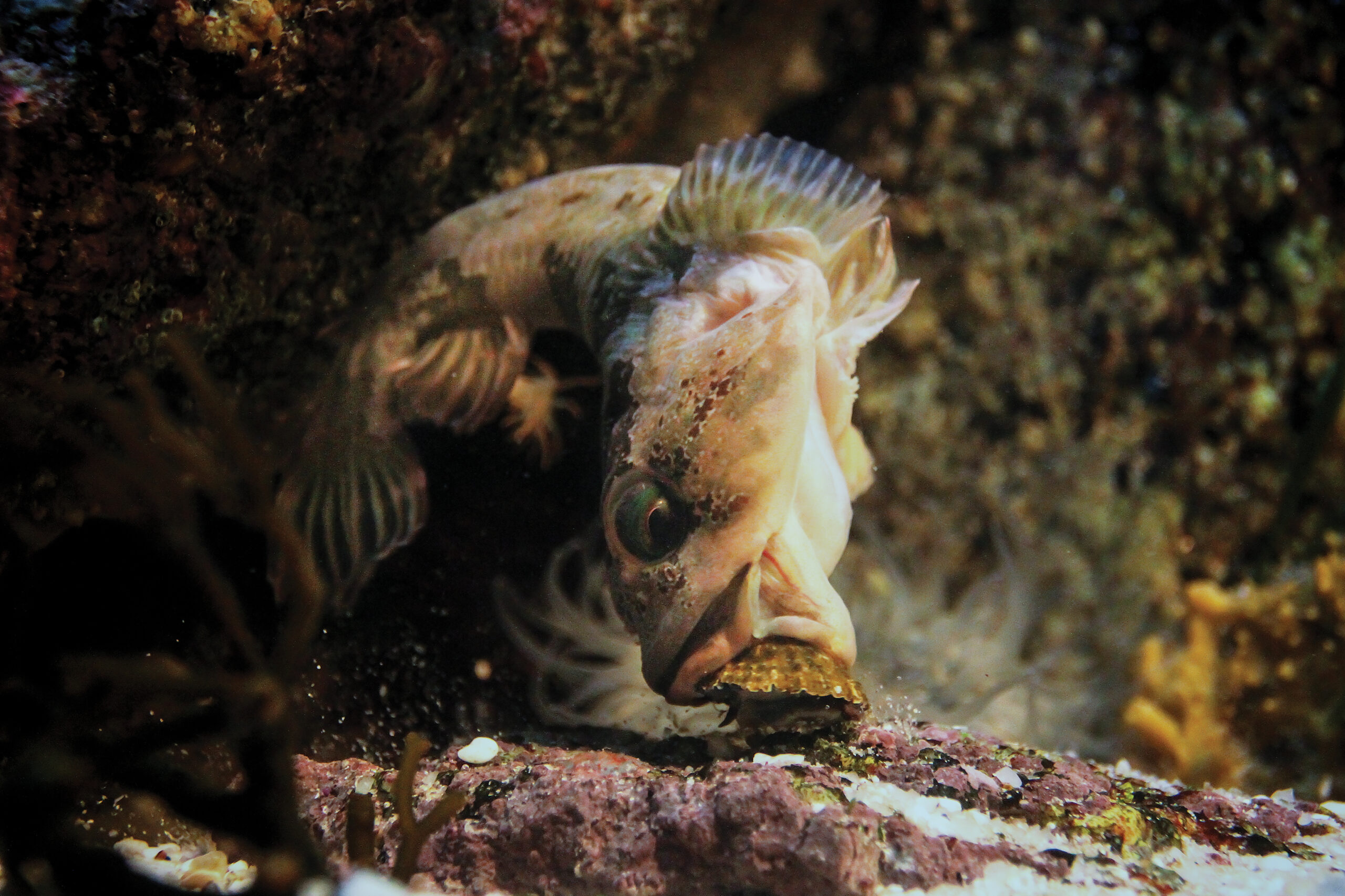
The rocksucker or giant clingfish has evolved a large suction pad underneath its body, modified from where its fins used to be. This suction pad can hold hundreds of times the fish’s weight and enables it to hunt in very rough water without getting washed ashore. Limpets are the clingfish’s meal of choice – shell and all, which they twist off the rocks in a fraction of a second, as if opening a bottle cap.
Photo by Craig Foster/Sea Change Project
All photography in the TIME feature originates from Sea Change Project – our underwater visual archive has become one of the most significant records of seaforest life in the world. In the past 15 years of daily immersion, we have filmed and photographed more than 60 animal interactions and behaviours that have never been recorded before.
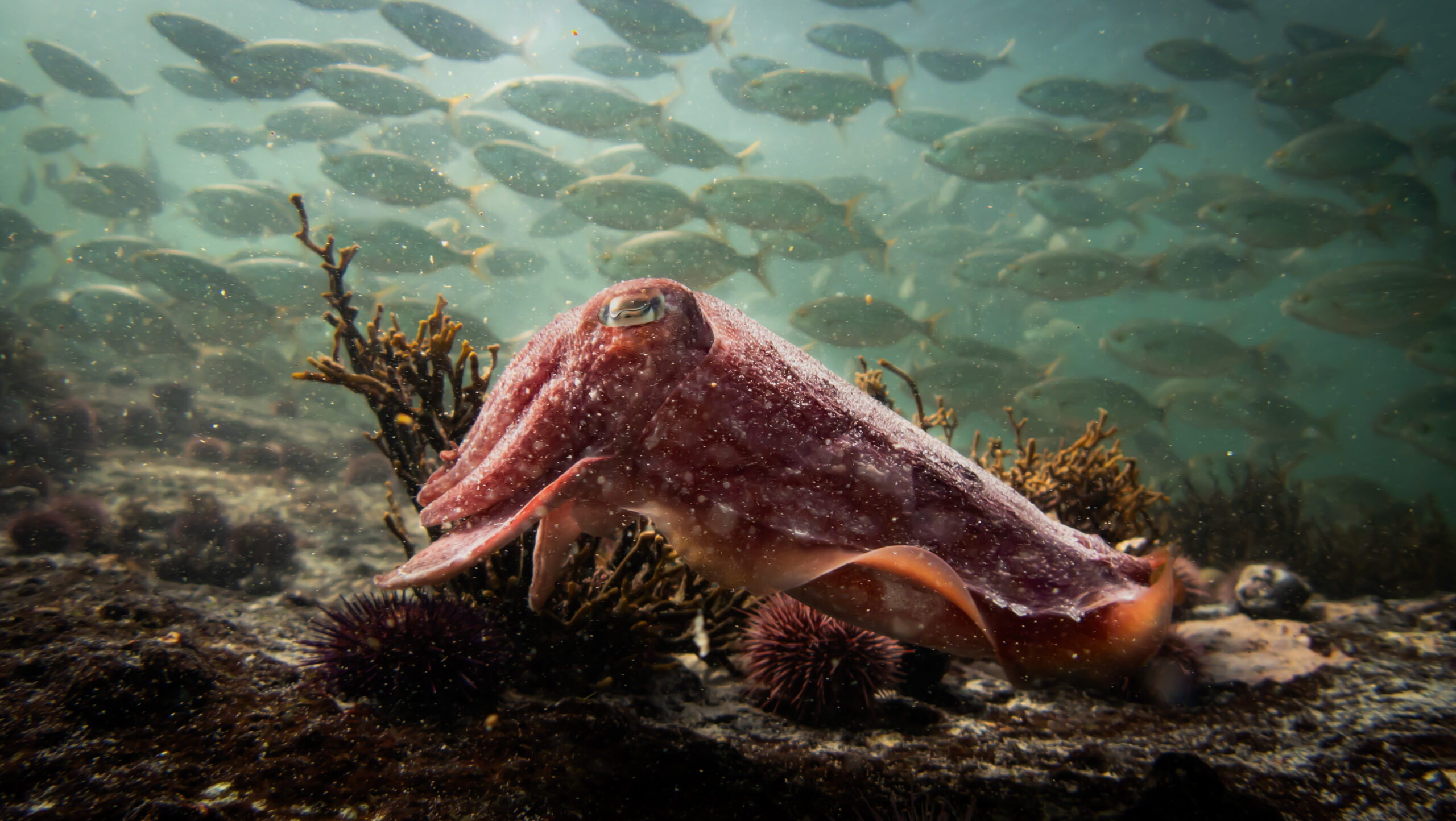
A Simonstown cuttlefish glides over an urchin-covered rock as a swarm of dream fish streams by. These cuttlefish are found only in The Great African Seaforest which is home to 15 cephalopods, many of which are also endemic.
Photo by Craig Foster/Sea Change Project
We use unique underwater tracking to observe species and behaviours, and understand and learn how the seaforest operates as one interlocked, interdependent and sentient system. We also coined the name ‘the Great African Seaforest’, because naming something is the first step to protecting it. That name has since travelled far: into policy rooms, school curricula and the hearts of people who have never seen the ocean.
While coral reefs, mangroves, and seagrass meadows have commanded global media attention and conservation investment, kelp forests are mentioned by magnitudes less in mainstream coverage, policy frameworks and academic publications — despite forming some of the ocean’s most biodiverse and productive ecosystems.
TIME’S decision to lead with kelp is itself an editorial statement. For us at Sea Change Project, all of our work in this ecosystem has made it urgently clear that biodiversity should become as much of a focus as carbon is at present.
"The giant bamboo kelp off Cape Town is the multi-tasker of ecosystems - a nursery, a buffer against storms and a massive carbon sink. But what the Great African Seaforest project has revealed is that this forest is also a hotspot of biodiversity, a place where you can experience the intrinsic links between climate health and species diversity. You cannot have one without the other."
- Kathy Moran, former Deputy Director of Photography at National Geographic Magazine
The story arrives at a pivotal moment in the global conservation conversation. As carbon markets, blue carbon credits and net-zero commitments have reshaped how ecosystems are valued – and funded – ecologists and biodiversity scientists have raised an increasingly urgent concern: that ecosystems are being assessed primarily for their carbon storage capacity, sidelining the richer, harder-to-quantify value of the life they contain and the communities they sustain.
What are we losing on our myopic carbon watch? And can biodiversity be the secret weapon for mitigation and adaptation to a fast changing climate?
The digital article is live on TIME now, and the print edition is available from 8 June – World Oceans Day. In the meantime, explore our 1001 Seaforest Species project page for more.
If you would like to hear more stories – and help amplify the voices about the more-than-human that keep all of us alive – join us on this journey.