Friends and Foes Among the Kelp Fronds
helen walne
Many species have mutualistic arrangements that provide, among other things, taxi rides, housing, protection and food. Others don’t have such harmonious relationships, with one species taking advantage of the other … in one case, there is even some body-snatching.
These interactions are among thousands explored in the 1001 Seaforest Species project, in partnership with the Save Our Seas Foundation. This pioneering seedbank, which acts as a biodiversity baseline for the ecosystem, is being developed into a free-to-download app.
Happy arrangements that benefit both parties
Landlord and taxi service
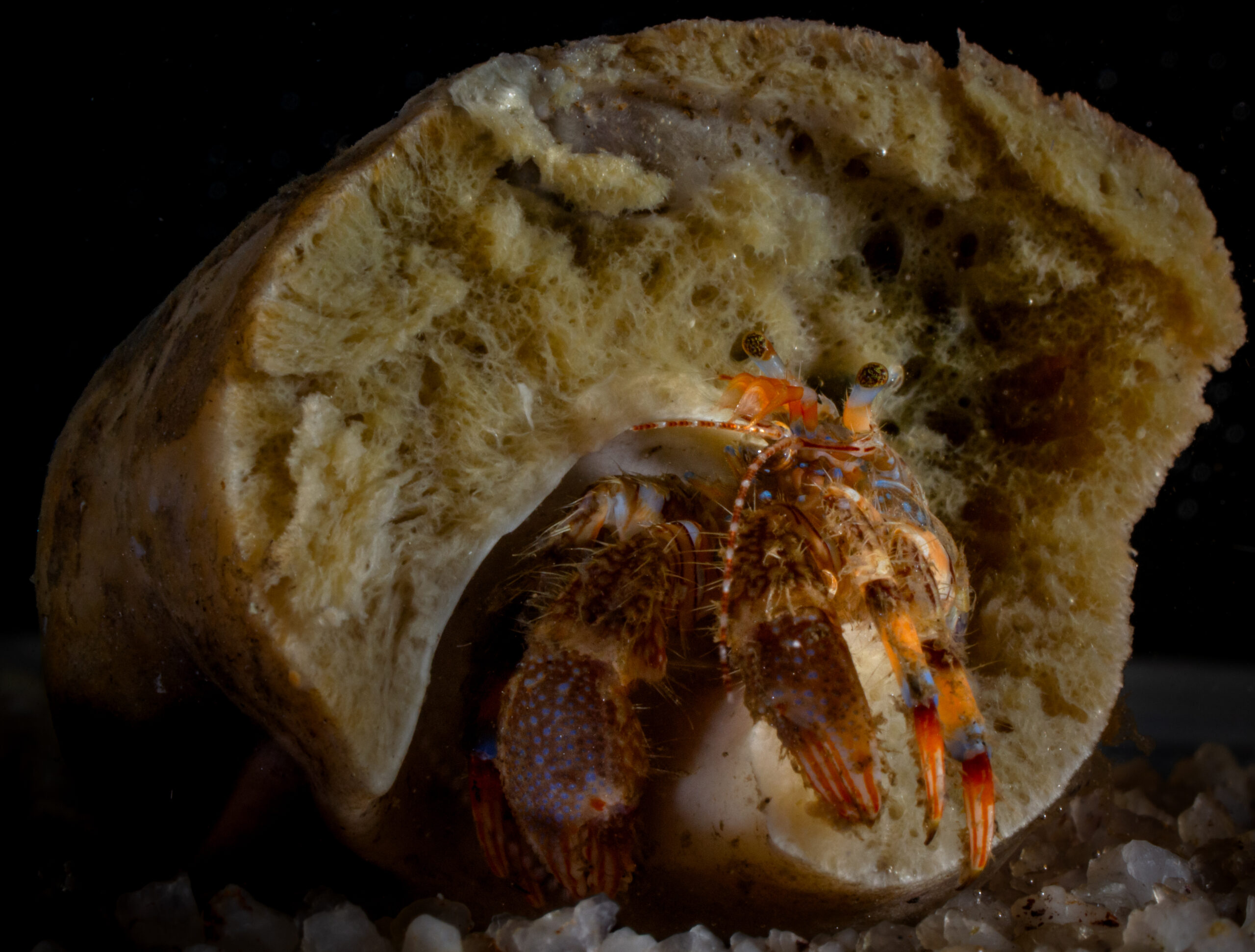
The Hermit-house sponge (Suberites ambulodomus), which was recently described, is the first South African sponge to have a mutualistic association with a hermit crab. The sponge provides housing for its renter. This is how it works: the hermit crab first moves into a shell like juveniles normally do, and the sponge then settles on the shell and overgrows it, extending its spiral chamber as the hermit crab grows. The clue to that initial occupation is the tiny shell left at the top of the spiral cavity – a remnant of the crab’s first home. So what’s in it for the sponge? It gets a mobile home which the hermit crab – happy in its ever-expanding house – transports to favourable habitats.
Taxi service and bodyguard
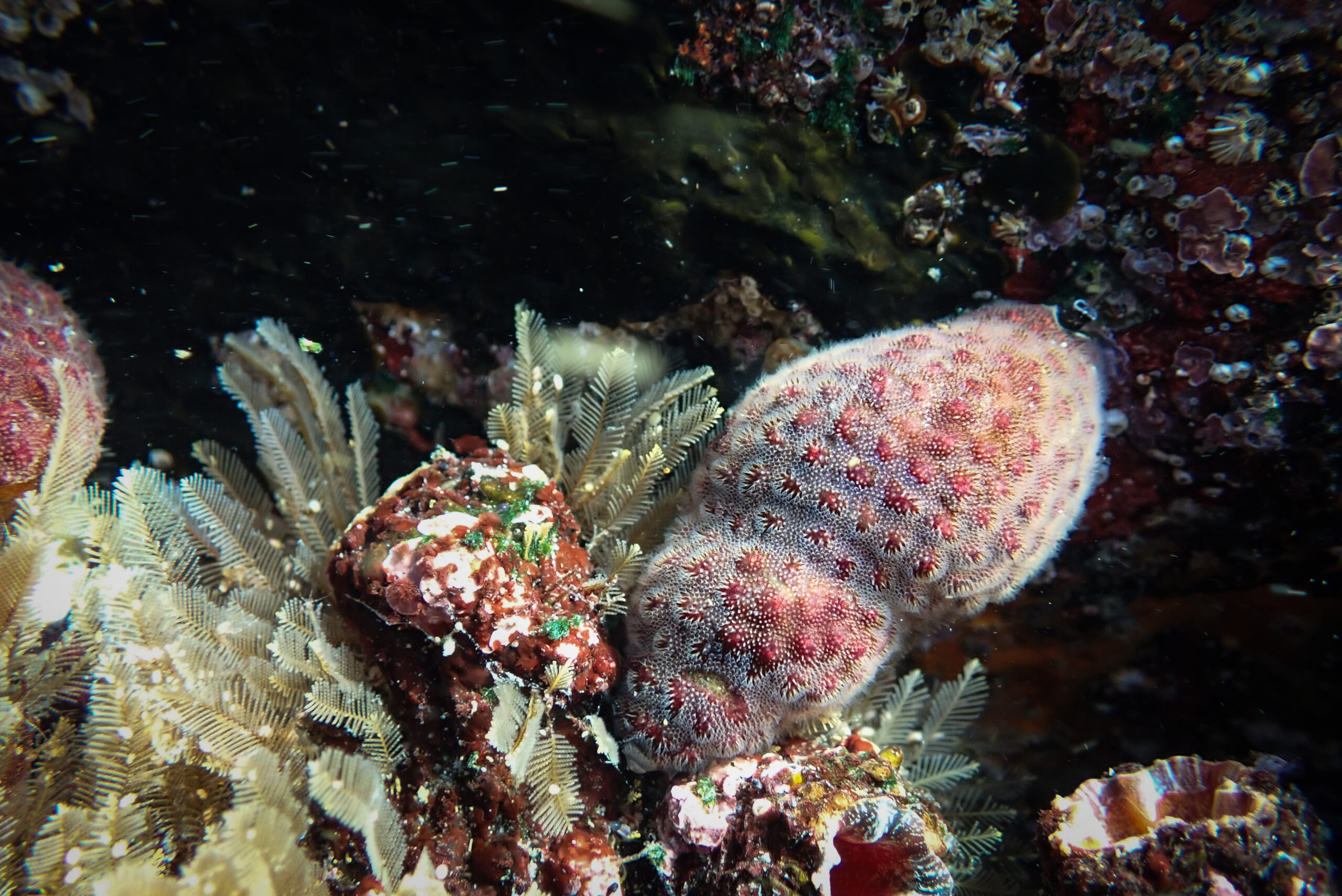
Similarly, the Whelk bryozoan (Alcyonidium nodosum), lives rent-free on two whelk species (Burnupena papyracea and B. pubescens) in exchange for providing bodyguard services. Knobbly red sheets of these bryozoan, comprised of male and female zooids, envelop the shells of the whelks. Seen with the naked eye as a soft and slightly fuzzy mat. The arrangement is mutually beneficial: the bryozoan colonies shield the whelks from predators such as rock lobsters, while the whelks in return are thought to ferry their passengers to good feeding areas and away from smothering sedimentation.
Landlord and cleaning service
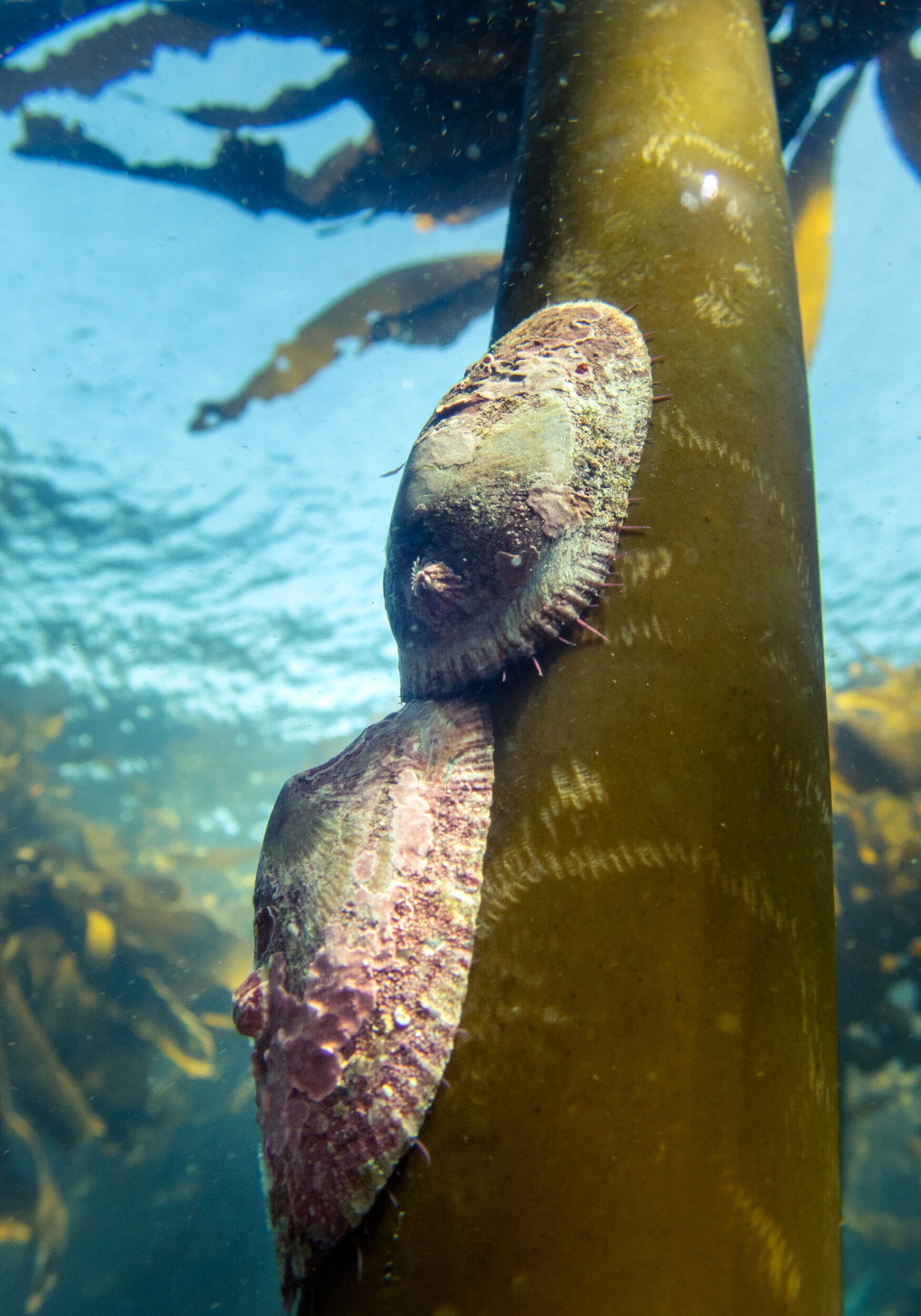
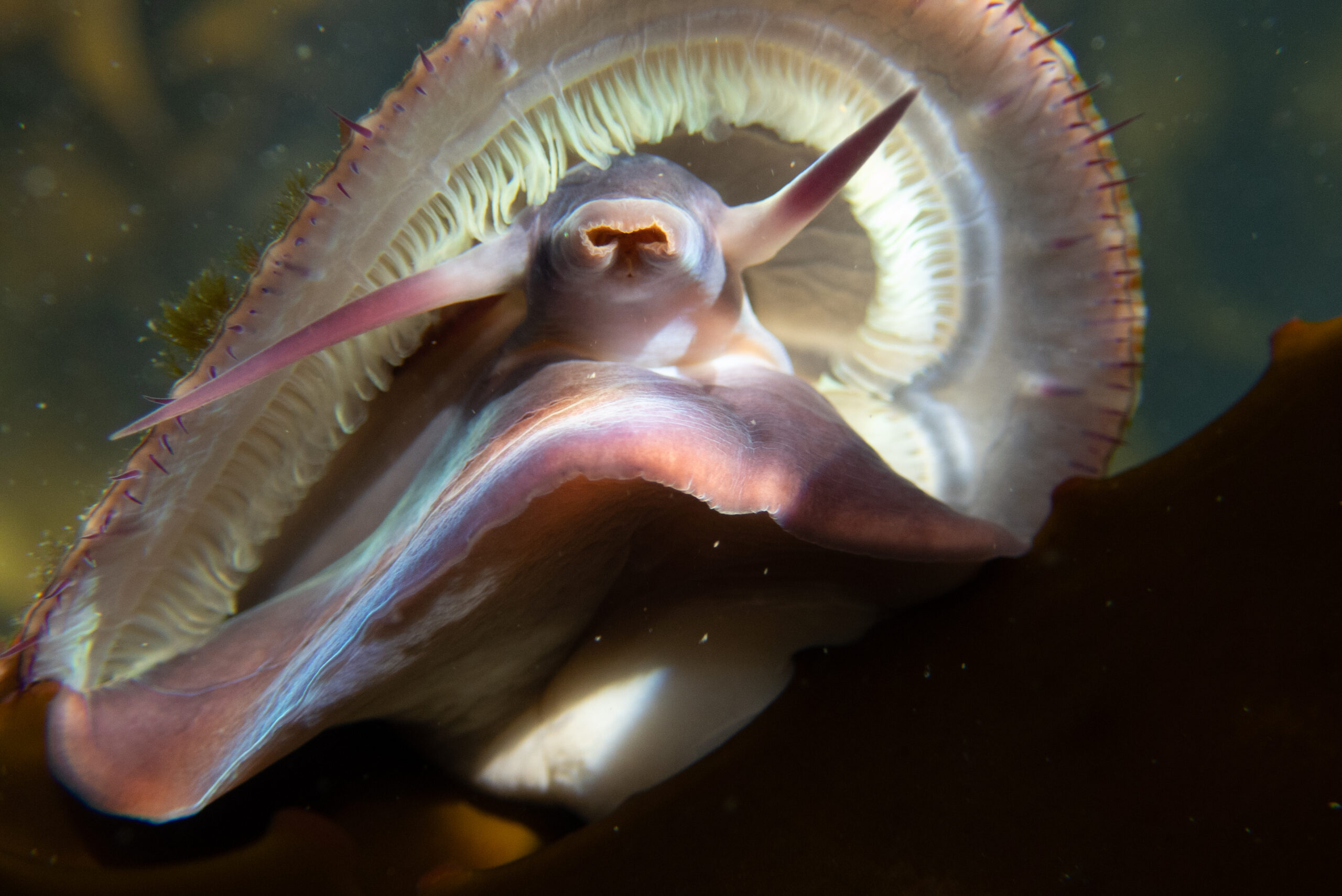
Kelp limpets (Cymbula compressa) have elongated-boat shaped shells that enable them to fit snugly against the narrow, curved stipes of Bamboo kelp (Ecklonia maxima), anchoring themselves securely on a swaying home in a shifting sea. But life doesn’t begin that way: after a larval stage in the open water, juveniles settle on the broad, flat fronds of the kelp and initially grow flat shells to match the terrain. Once they reach the size of a postage stamp, they migrate to the kelp stipe where they gradually transform their shells into the iconic boat-like shape. This is a bonus for the kelp too. By grazing on the stipes, limpets prevent epiphytic algae from taking hold, reducing drag and lowering the risk of the kelp being uprooted during fierce storms.
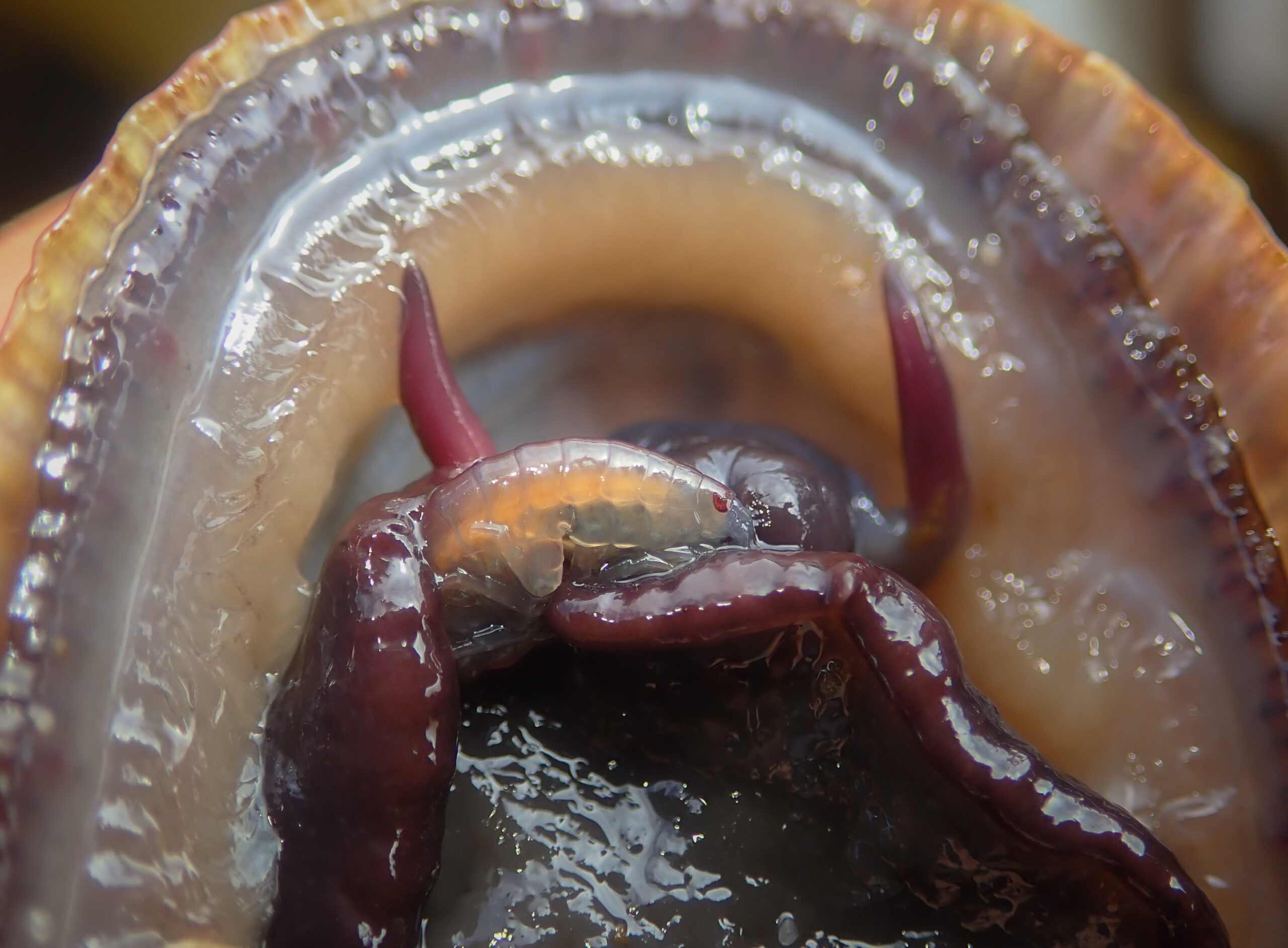
Another of these arrangements is the Limpet amphipod (Calliopiella michaelseni) inhabiting limpets such as the kelp, giant, goat’s eye and pink-rayed limpets. These tiny animals live in the mantle cavities on the underside of these gastropods, where they are protected and feed on the limpets’ faeces and possibly on algal fragments. These co-habitors also pay their way by keeping the limpets clean.
Clockwise from left: Kelp limpets (credit Jannes Landschoff), Kelp limpet (credit Craig Foster), Limpet amphipod (credit Jannes Landschoff).
Landlord and chef
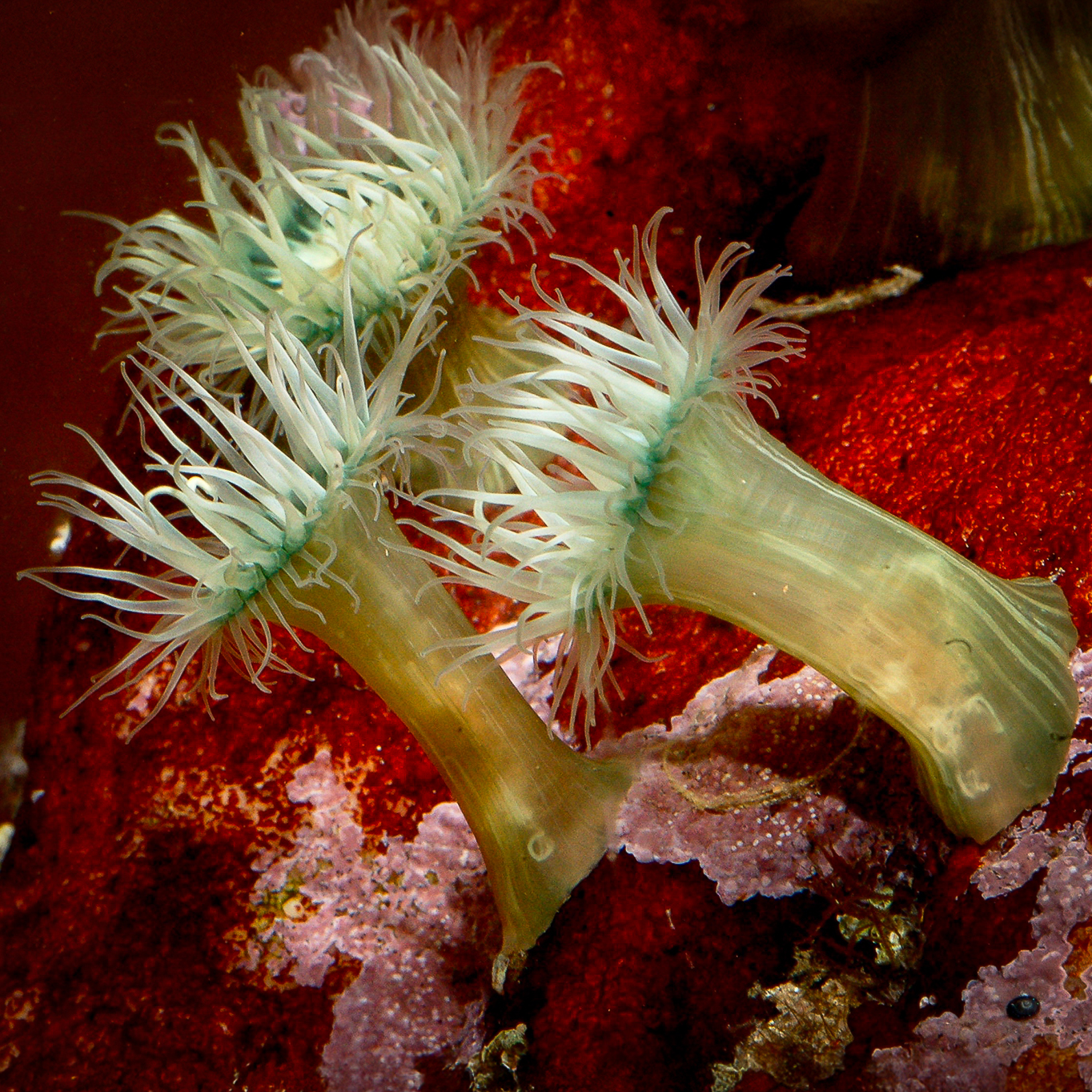
Striped anemones (Anthothoe stimpsonii) have a unique relationship with photosynthetic algal cells that live inside the anemone’s tissue. The algae photosynthesise using sunlight and carbon dioxide, producing sugars, glycerol and other carbon compounds, which the anemone uses to supplement the nutrition it gets from catching small prey with its stinging tentacles. In return, the anemone provides the algae a protected spot with access to sunlight, plus metabolic waste products (such as nitrogen compounds) the algae can reuse as nutrients.
Not-so-reciprocal relationships
Body-snatching isopods
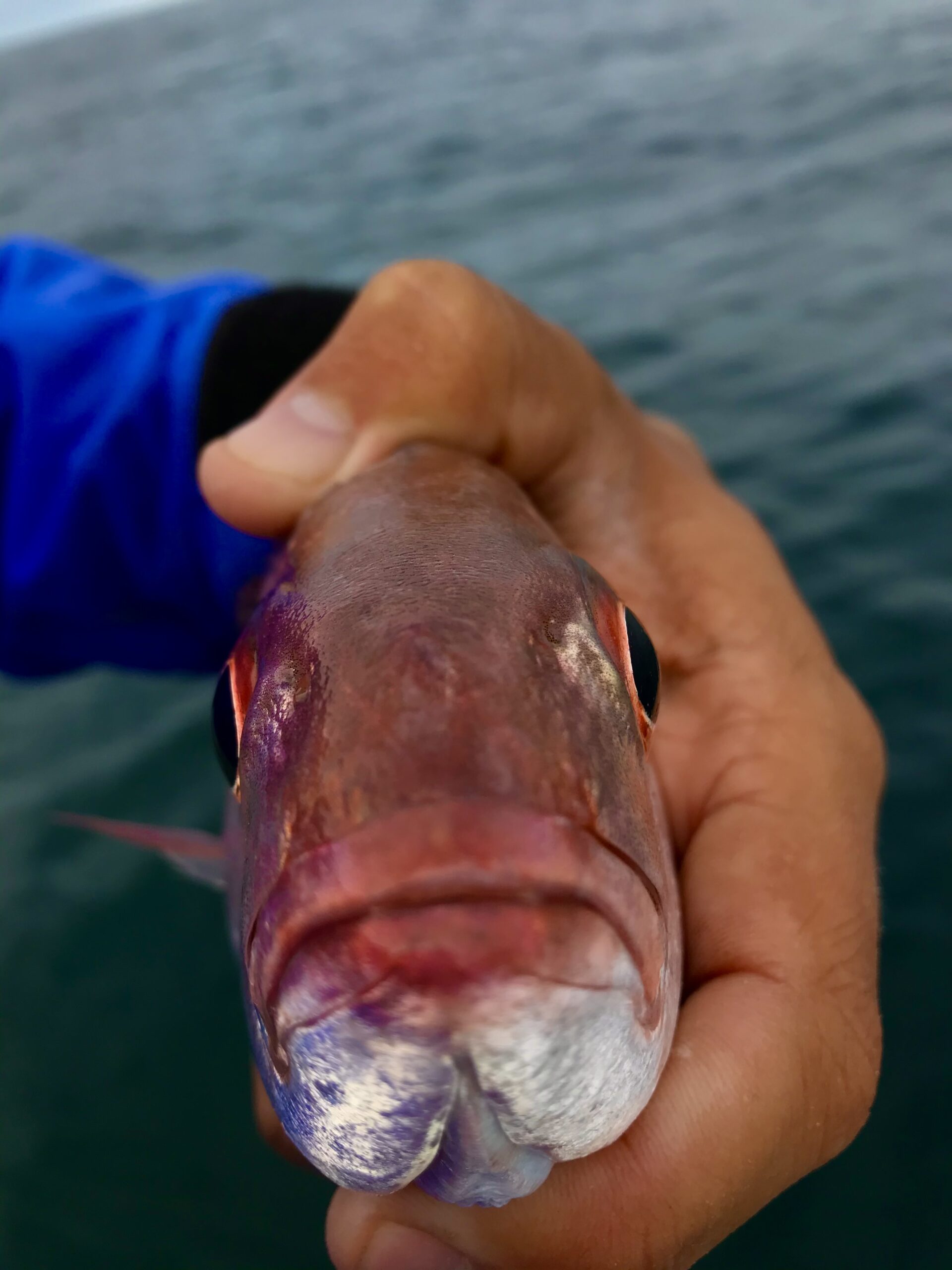
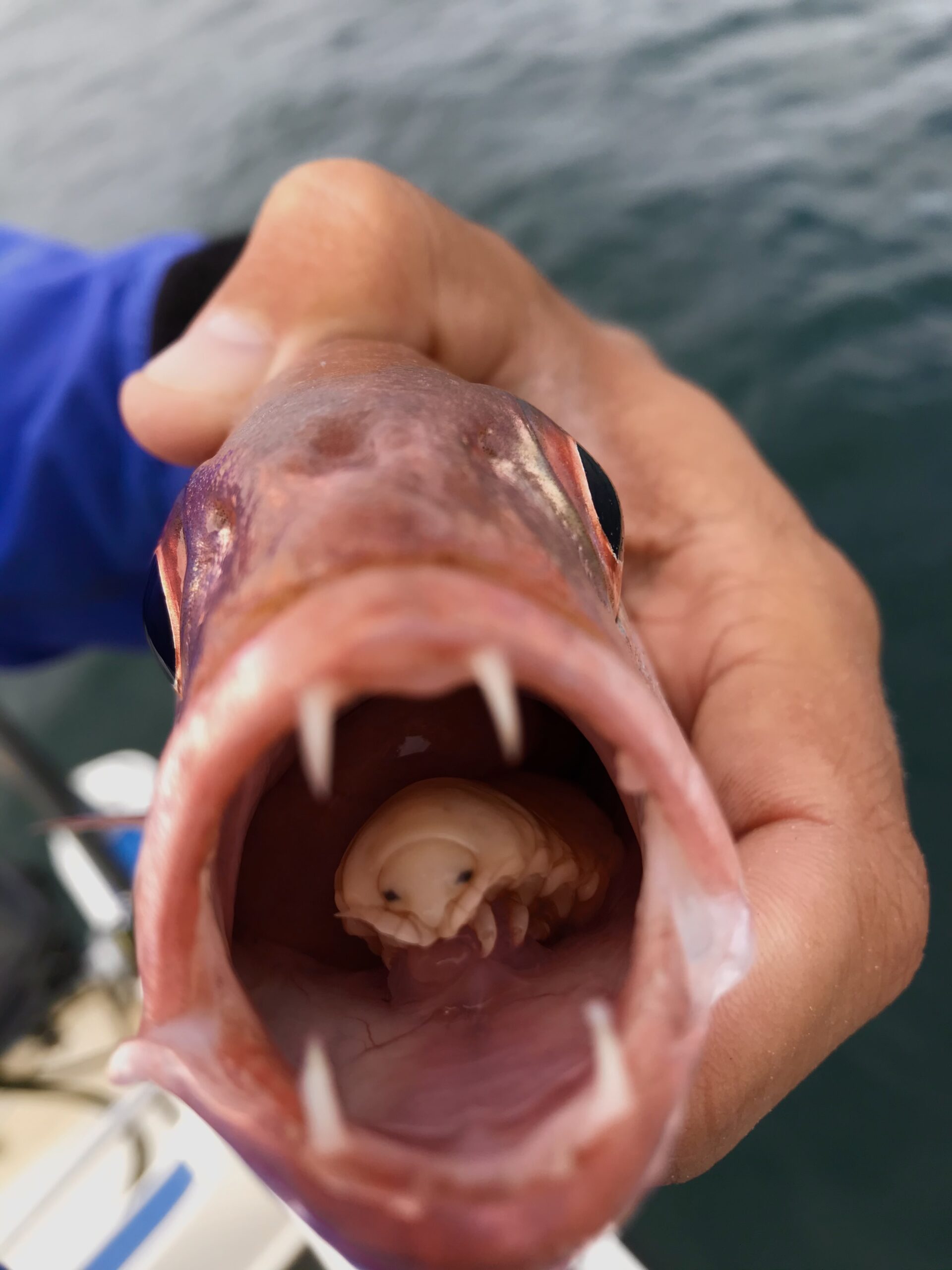
To the human eye, this set-up resembles a horror show. The Giant tongue-replacing isopod (Ceratothoa springbok) is a large, wide-bodied and flattened isopod that enters the mouth of Carpenter seabream fish through the gills, severs the blood vessels leading to the tongue, which withers and drops off. The female then attaches onto the stub of the tongue and takes over its function, while the smaller male takes up a position beneath the female. This is the only known example of a group of parasites actually functionally replacing the organs of their hosts. In general, the parasites appear to cause relatively little harm to their hosts, though some studies have shown parasitised fish to be thinner than un-parasatised ones.
Giant tongue-replacing isopod (credit Don Marx)
Body-munching copepods
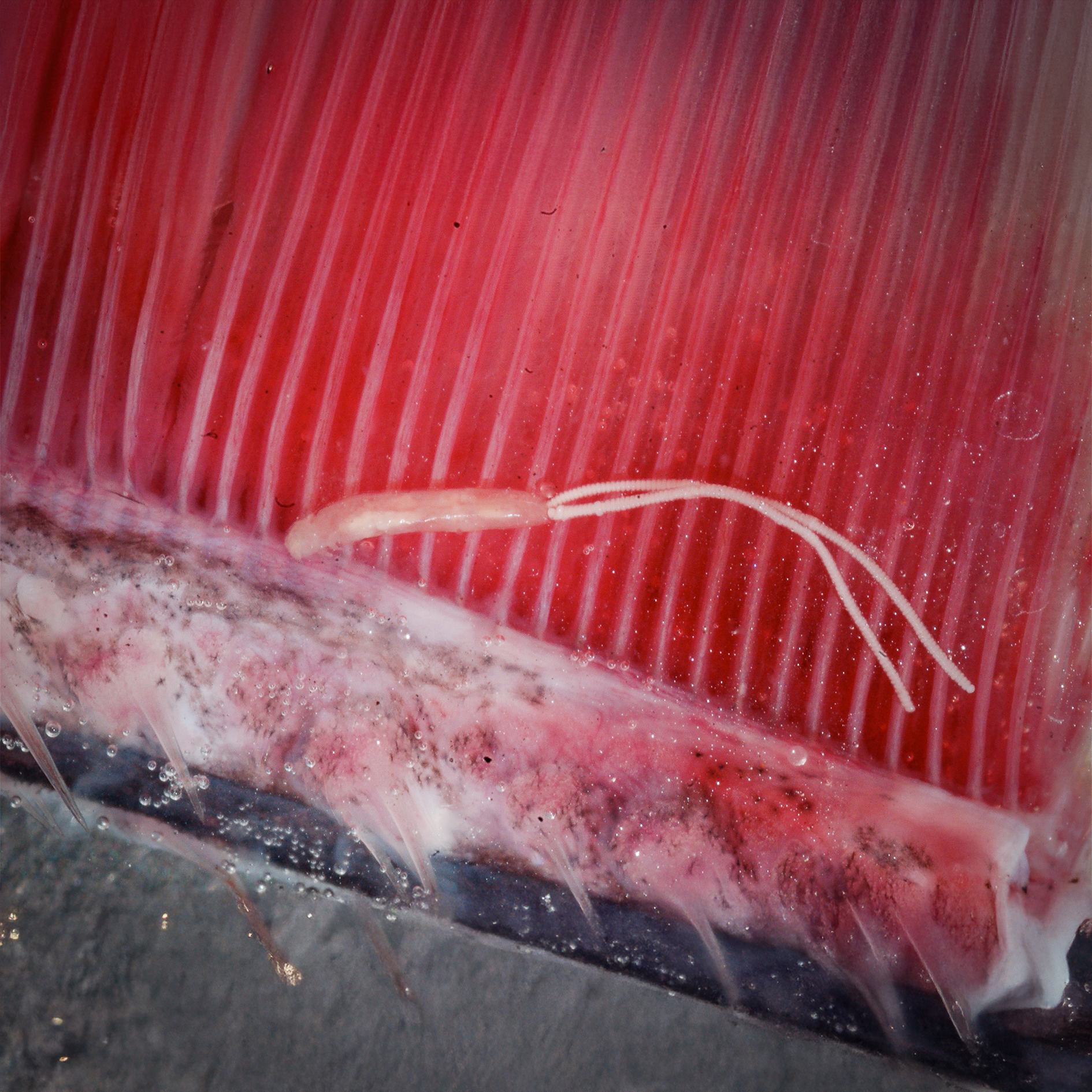
Copepod gill parasites (Hatschekia conifera) are small parasitic animals that attach themselves to the gills of fishes and are thought to feed on mucus and gill tissue of the host fish. One of more than 70 species in this genus, this is the only one found in South Africa.
Snoek squatters
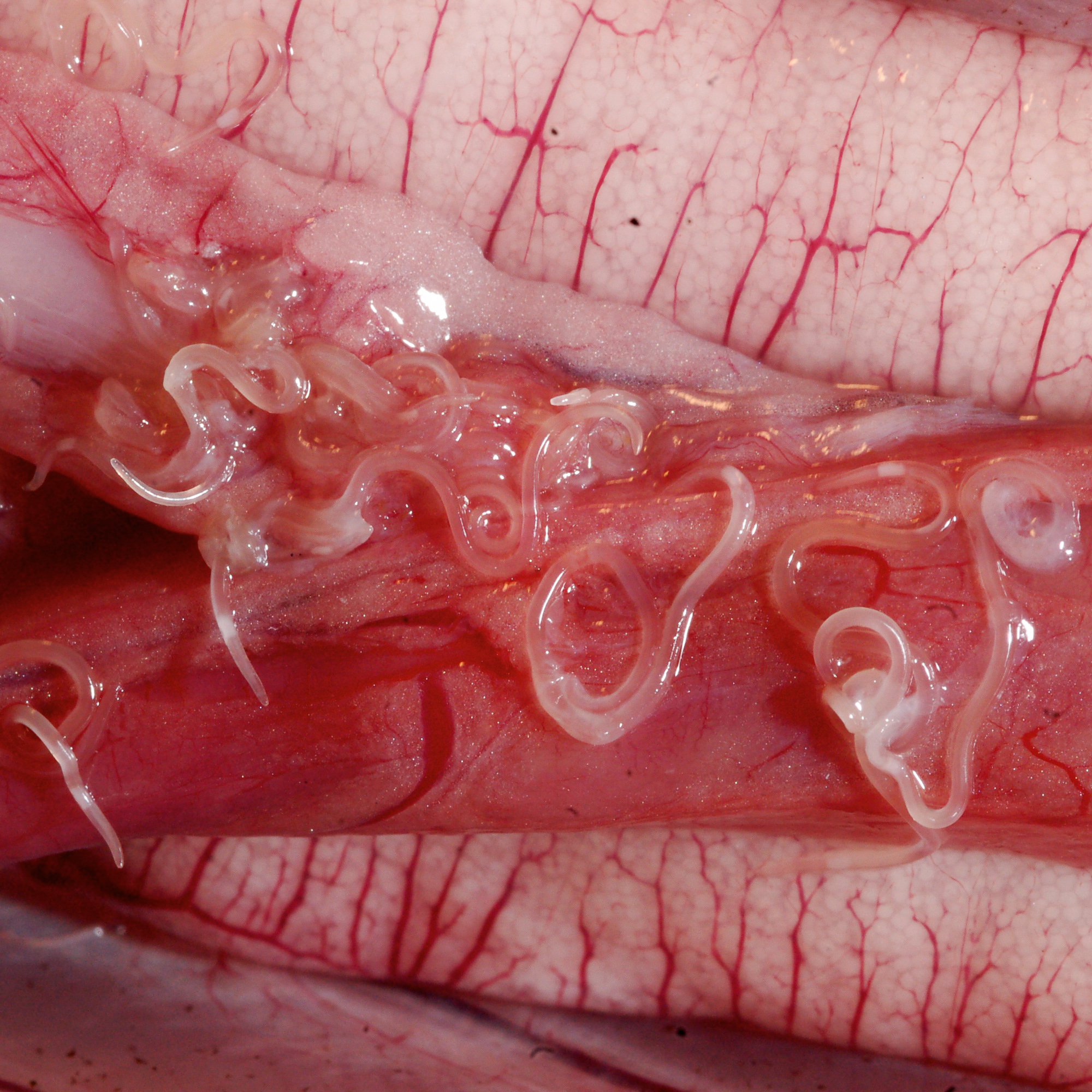
Snoek roundworms (Anisakis pegreffii) take up residence in the body cavity of snoek – and the longer the fish, the greater the squatters. These free-loaders are not just pesky to fish; they can be problematic to humans. Some anisakid nematodes that establish in the muscle tissue of host fish can cause strong allergic reactions in humans who eat raw or undercooked fish, and this is the case for the species that parasitises snoek in New Zealand, for example. In South Africa, the parasites are confined to the body cavity, so are not normally eaten. Workers in the fishing and seafood industries still remain at risk though, since prolonged and repeated contact exposure to the parasites can cause allergic reactions.