Crustaceans in the spotlight at first meeting in Africa
helen walne
In the Great African Seaforest, thousands of animals knit this ecosystem together in a complex matrix of astonishing biodiversity – and it’s held together, in no small part, by crustaceans.
From tiny amphipods navigating the kelp fronds to rock lobsters scuttling along the reefs, crustaceans are the seaforest’s great connectors. South Africa alone has described more than 13,000 marine animals, of which over 2,300 are Crustacea. They are not mere inhabitants of this ecosystem; they are its architects, its recyclers, its predators and prey.
From June 1-4 2026, crustaceans took centre stage in Africa for the first time when 100 delegates from around the world gathered in Stellenbosch, South Africa, for the Crustacean Society Mid-Year Meeting 2026. The society is an international academic grouping, founded in 1981, gathering students, professional carcinologists and anyone interested in the Crustacea from around the world. It’s the only international society for carcinologists, with roughly 400 international members. The meeting was hosted by a team of crustacean researchers from Stellenbosch University, including Sea Change’s biologist Jannes Landschoff, showcasing the rich and growing diversity of crustacean science being conducted across South Africa.
Sea Change Project, supported by the Save Our Seas Foundation, brought its 1001 Seaforest Species project to the gathering. Using rigorous marine biology, the art of underwater tracking and deep storytelling, it creates a baseline dataset unlike any other. Over thousands of hours of dives in the Great African Seaforest, we have described new species and behaviours, creating a living record of what this ecosystem truly contains. It is becoming more than a scientific archive and will live as an app, placing this crucial dataset into the hands of researchers and ocean lovers globally.
Four Creatures That Tell The Story
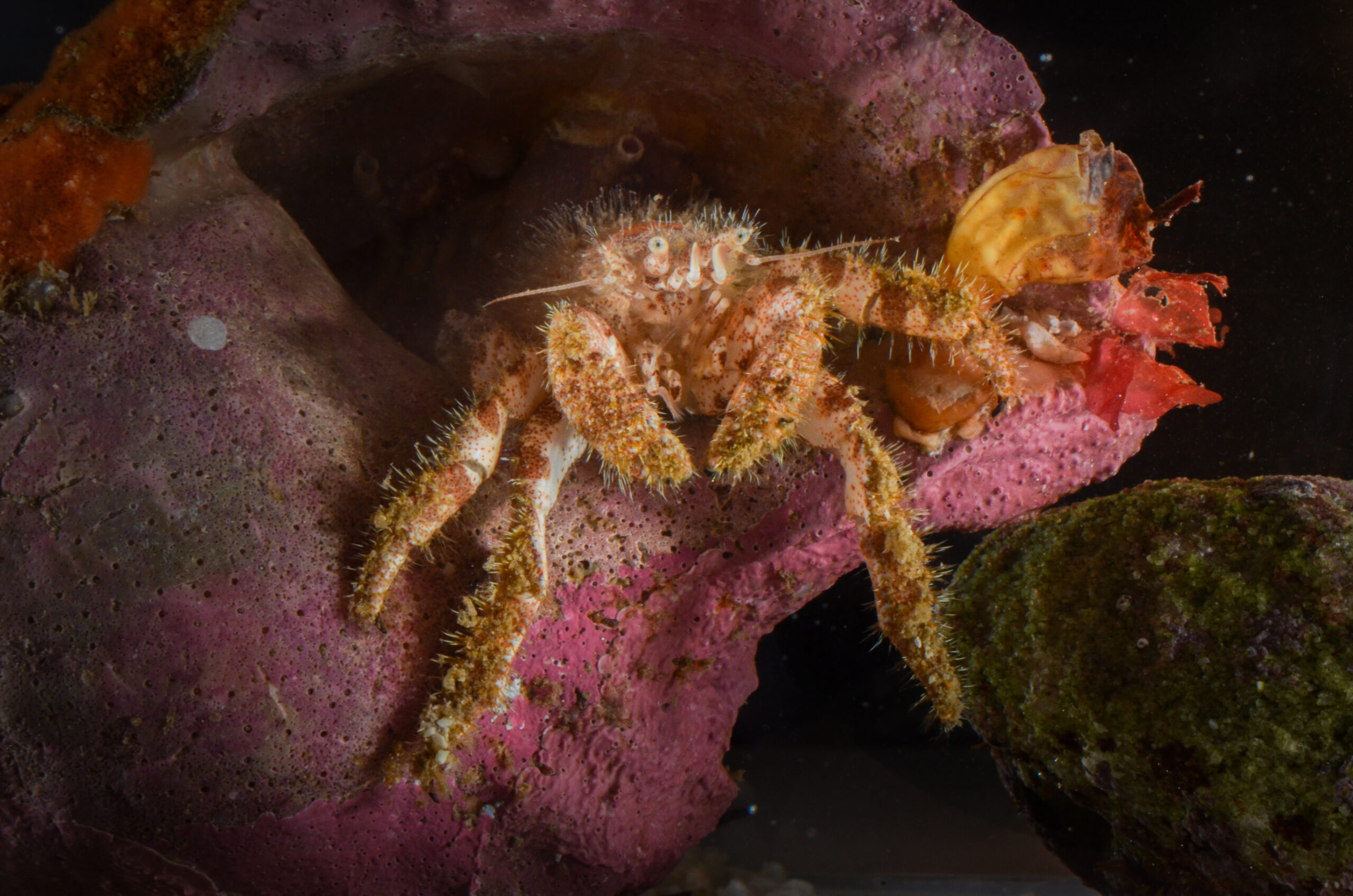
Hercules hermit crab − Cancellus makrothrix
After a century hidden from sight, we rediscovered, photographed and redescribed this hefty crustacean − the region’s most powerful hermit crab, which was first recorded 100 years ago.
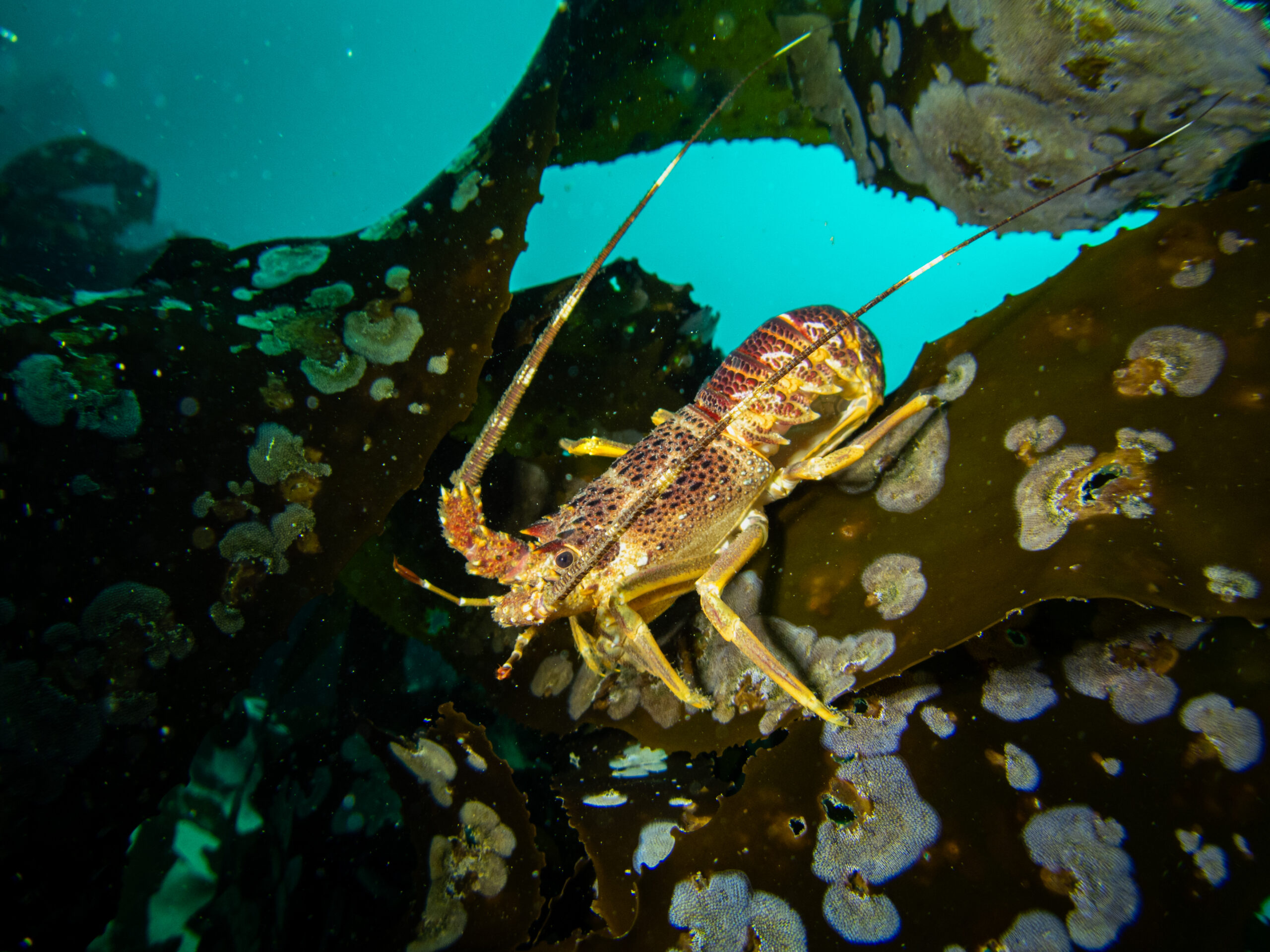
West coast rock lobster − Jasus lalandii
These coastal specialists once shaped their environment, thriving in strong currents. Sadly, fishing has now reduced their numbers. Up close, their hairy-scaly surface reveals remarkable adaptations to life along the shore.
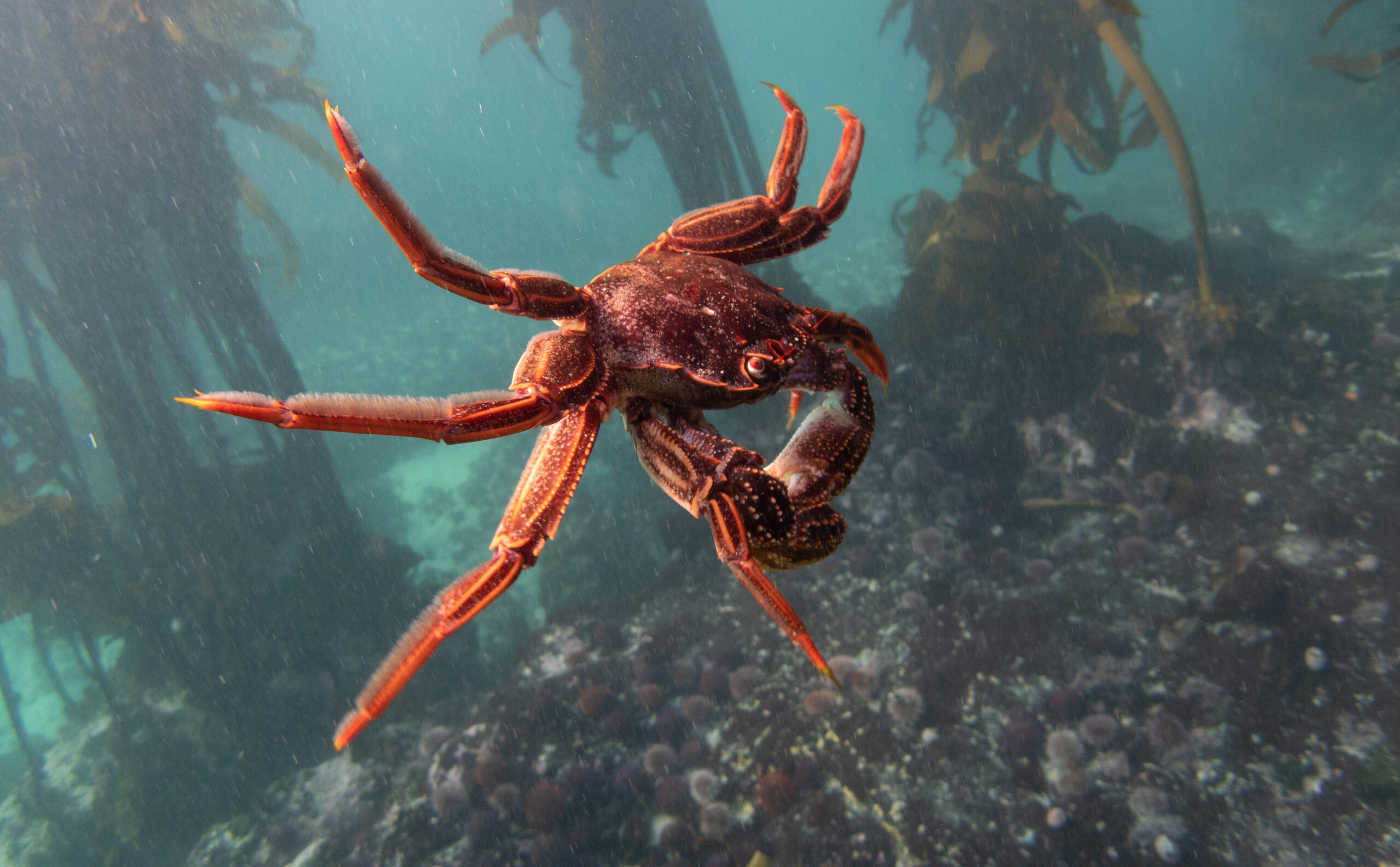
Cape rock crab − Guinusia chabrus
The most common shore crab along the southwest coast of South Africa, this species’ incredibly strong legs and hooked dactyls make it perfectly adapted to their wave-exposed dominion.
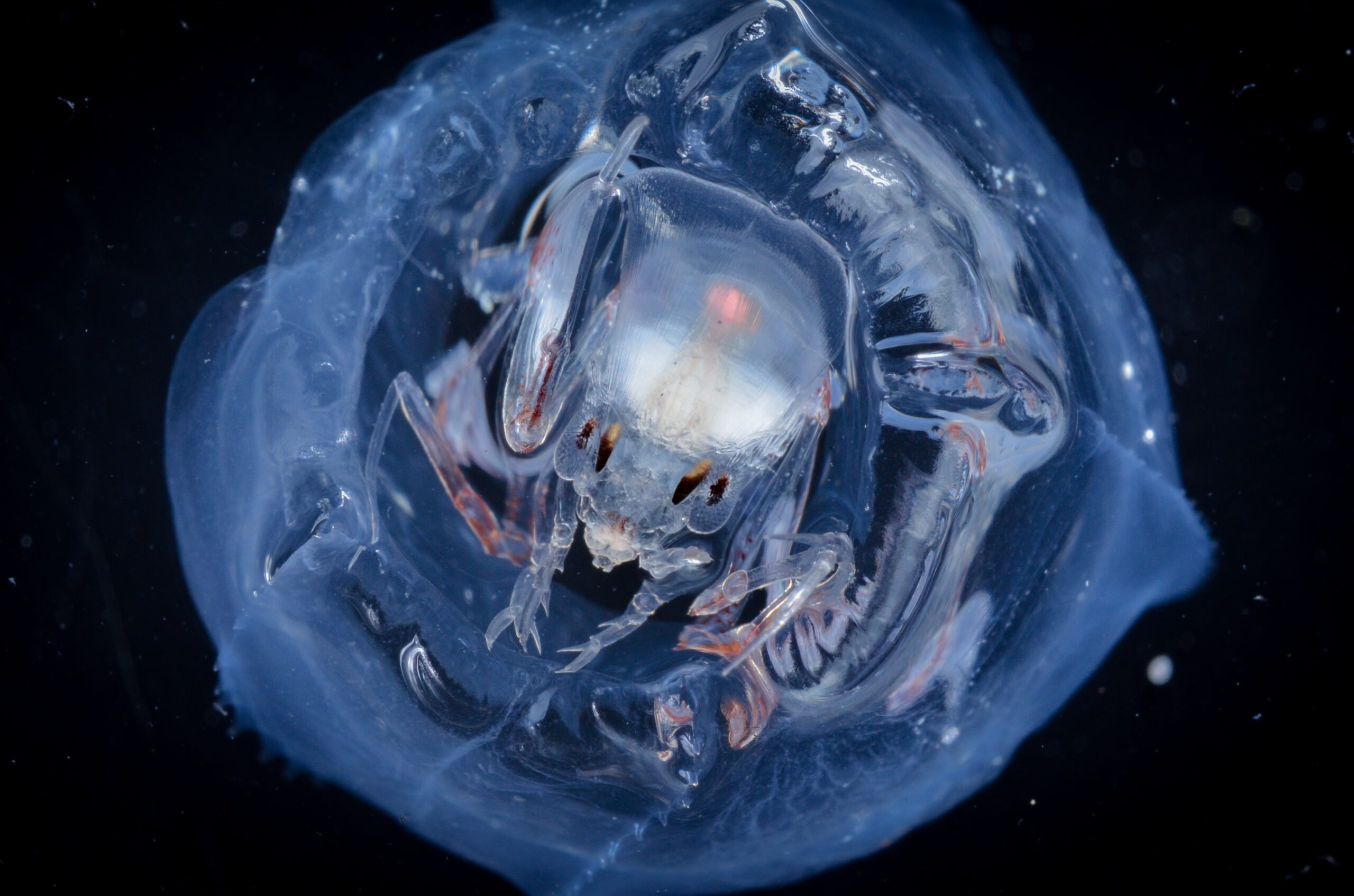
Pram bug amphipod – Phronima sedentaria
This bizarre-looking, transparent amphipod has mastered the art of living on the go. The female finds a salp, devours its soft innards, and moves right in. She steers the hollowed casing through the open ocean, using it as both shelter and nursery while her young hatch and grow inside.
Why Biodiversity Matters
At the genetic level, variation within species is what allows populations to adapt – to resist new diseases, to tolerate shifting temperatures and to survive the unexpected. At the species level, that variation multiplies into the complex interactions that sustain ecosystems: predators keeping the ecosystem in check, scavengers cycling nutrients back into the system, filter-feeders maintaining water clarity. Remove enough of these interactions, and the system becomes poorer and unstable.
This is what is at stake in the Great African Seaforest, and in marine ecosystems everywhere.
Gatherings such as the Crustacean Society Mid-Year Meeting help to advance the case for biodiversity preservation by bringing together cutting-edge research, innovative ideas and meaningful collaboration. The 1001 Seaforest Species project highlights the importance of not only scientific research and collaboration, but the stories that are told to bring attention to the interconnectedness of all life on Earth.
To the casual eye, a lobster picking its way across a rock, or an amphipod commandeering a salp might seem unremarkable, but these animals have been going about their work for millions of years, and they are part of a living system that ultimately supports all life on Earth. Their presence is not incidental – it is foundational.