Enacting the Precautionary Principle Can Create a World of Hope
SWATI THIYAGARAJAN
There is a scene in the movie Don’t Look Up where two scientists try to convince the world that an imminent asteroid strike is a threat to all life. With headlines and newscasters barely taking them seriously, one of the scientists has a meltdown on national television screaming that everyone is going to die.
Of course, this is a fictional movie, but its messaging feels real to those of us working in conservation storytelling. Right now, no precaution can be too conservative, but those with the power to prevent our planet and its people from being hurled into chaos aren’t listening.
The concept of the ‘precautionary principle’ received broad international recognition at the UN Conference on Environment and Development in 1992, which adopted the Rio Declaration. The declaration was significant as it was the first time that environment and economic goals were seen as interdependent. Up until then, they were seen as opposing forces. The fundamental philosophy of the precautionary principle is to take preventative action to protect the environment or public health even if the scientific evidence is uncertain or incomplete. However, in the three decades since, the economy has consistently trumped the environment and the precautionary principle has stayed mainly on paper. Our ‘leaders’ are not looking up.
This has to change. This year, there is a lot to face up to.
Around the world, the threats of biodiversity loss, climate change and pollution are not intellectual exercises – they are lived realities. From Indigenous peoples, local communities, marginalised urban communities, farmers and women in rural areas who grow food and gather firewood and water are at the front face of the crisis.
On this same planet, some speak about how there is a window. ‘There’s still time,’ they cry. ‘Technology will solve it.’ Some others don’t even think there is anything wrong – what’s happening has happened before and it’s Earth’s way of resetting. For others – those mostly responsible for the calamity – it’s business as usual, perhaps with a bunker ‘just in case’.
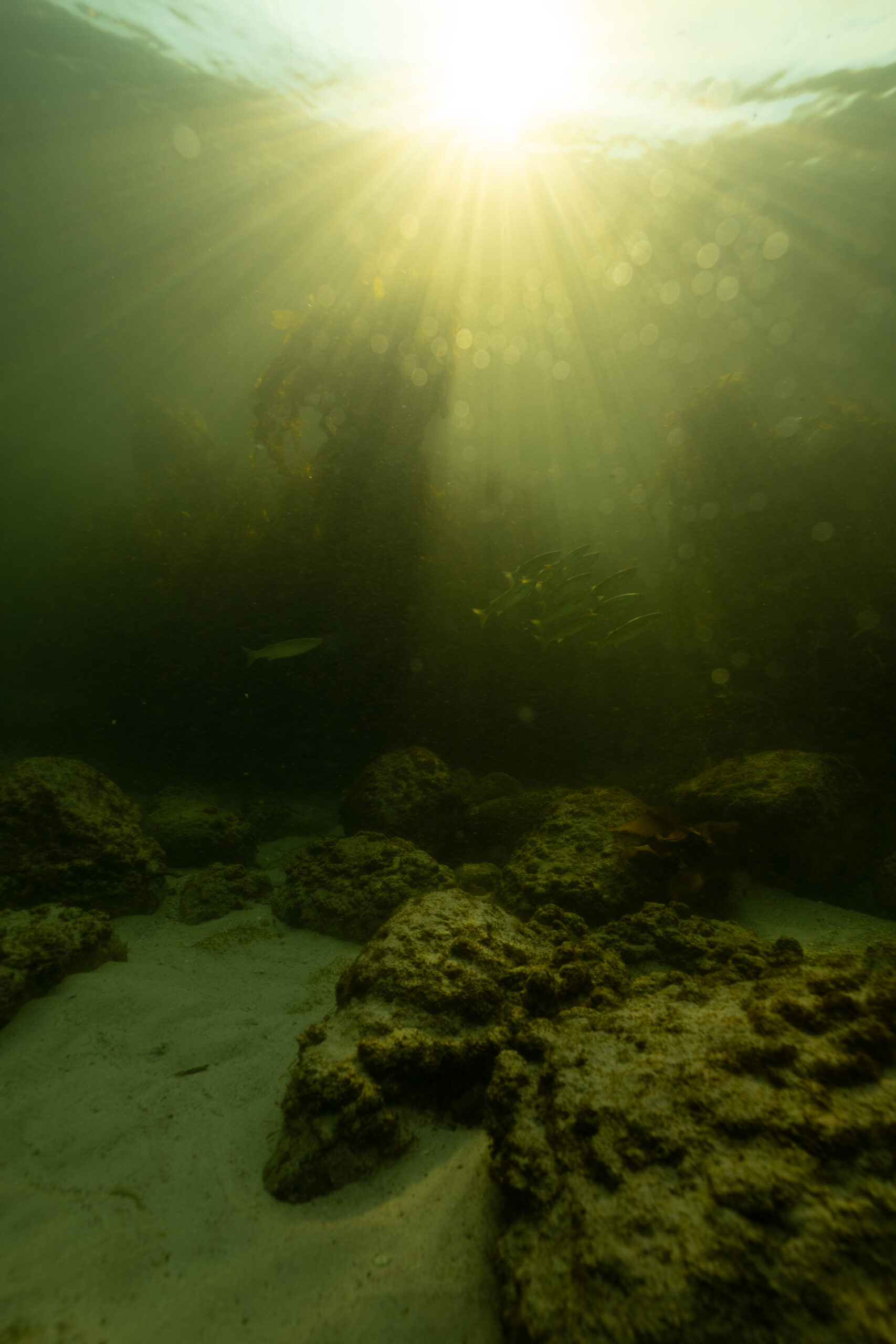
Here are some facts that are true no matter where you land on matters of climate change, biodiversity loss and pollution. Right now, the ocean is the hottest it has been in 120,000 years, with the average surface temperatures sitting at 21.1 degrees Celsius. The ocean is Earth’s buffer, tasked with the job of absorbing most of the excess carbon dioxide emitted by the world due to the burning of fossil fuels. Because of this, it has been warming at a record rate. Scientists have warned that hotter oceans will mean more extreme storms and sea-level rise and threats to the survival of sea life and the livelihoods and food security of billions of people. A new report has also warned that 25 million hectares of kelp globally could potentially be wiped out by 2050.
Headlines around the world have blared with news of deaths, displacement and wildfires during Europe’s scorching summer. We have seen massive flood devastation across South Asia, and many parts of the world are in the grip of severe drought. Recently, a report by the UN Environment Programme (UNEP) forecast that global temperature rise is set to cross 1.5° Celsius, likely within the next few years. On top of that, a potentially record-breaking El Niño is now bearing down on us.
Last year, much like the screaming scientist in the movie, a worst-case scenario forecast was made. It claimed that at a two-degrees Celsius rise in temperatures, two billion people would die; at a three-degree rise, four billion would die. That’s roughly half the world’s entire population.
The report said if things don’t change, this level of temperature rise would occur between the middle and end of this century. The significant factor? The report was not created by a fringe group or even an intellectual think tank, but by the UK Institute and Faculty of Actuaries (IFoA) together with the University of Exeter – basically a group of insurers. Not only was this report largely ignored by most media, the headlines in the few publications that reported on it were in the vein of ‘Global economy could face 50% loss in GDP between 2070 and 2090 from climate shocks, say actuaries.’ Again, the economy trumped the lives of people.
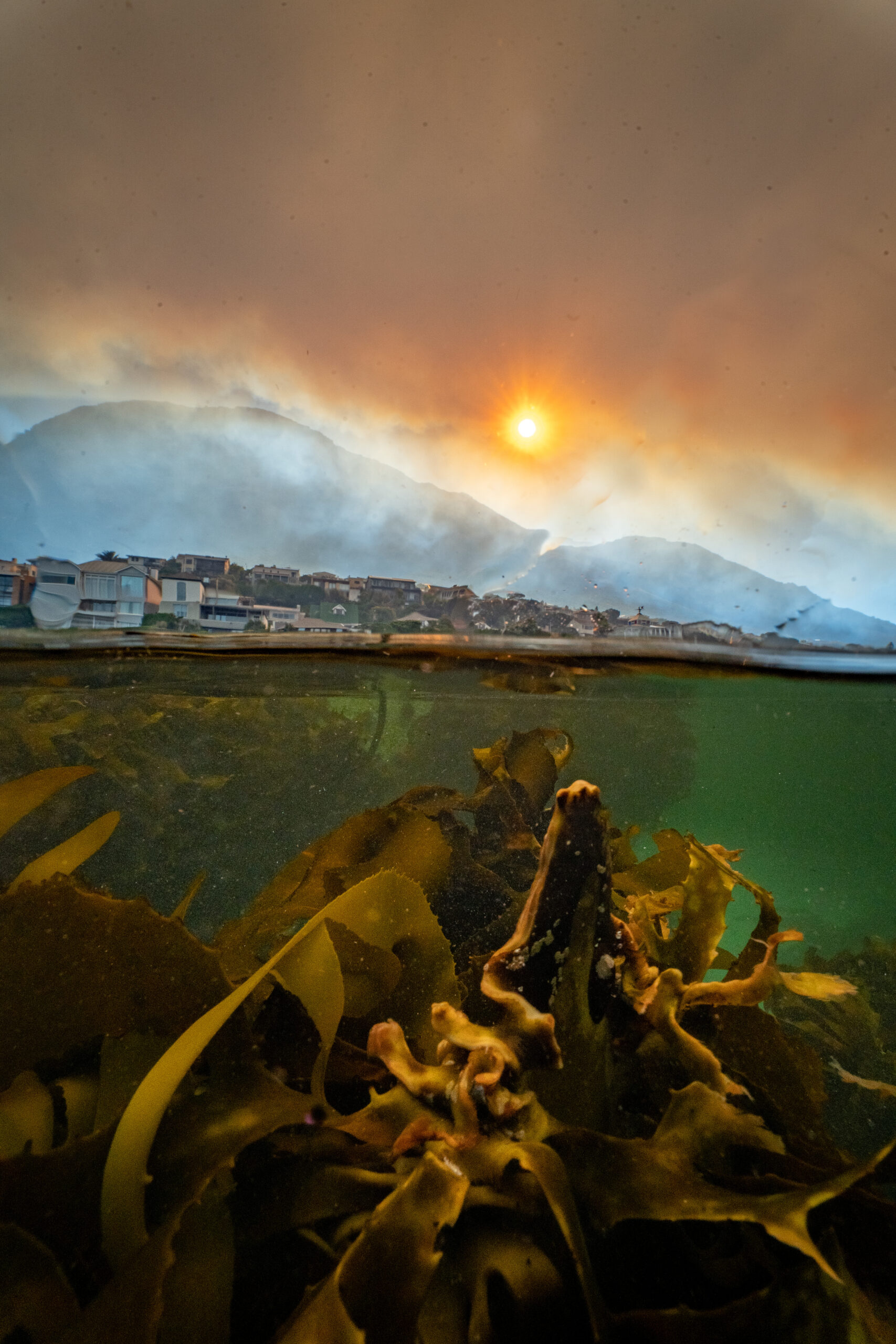
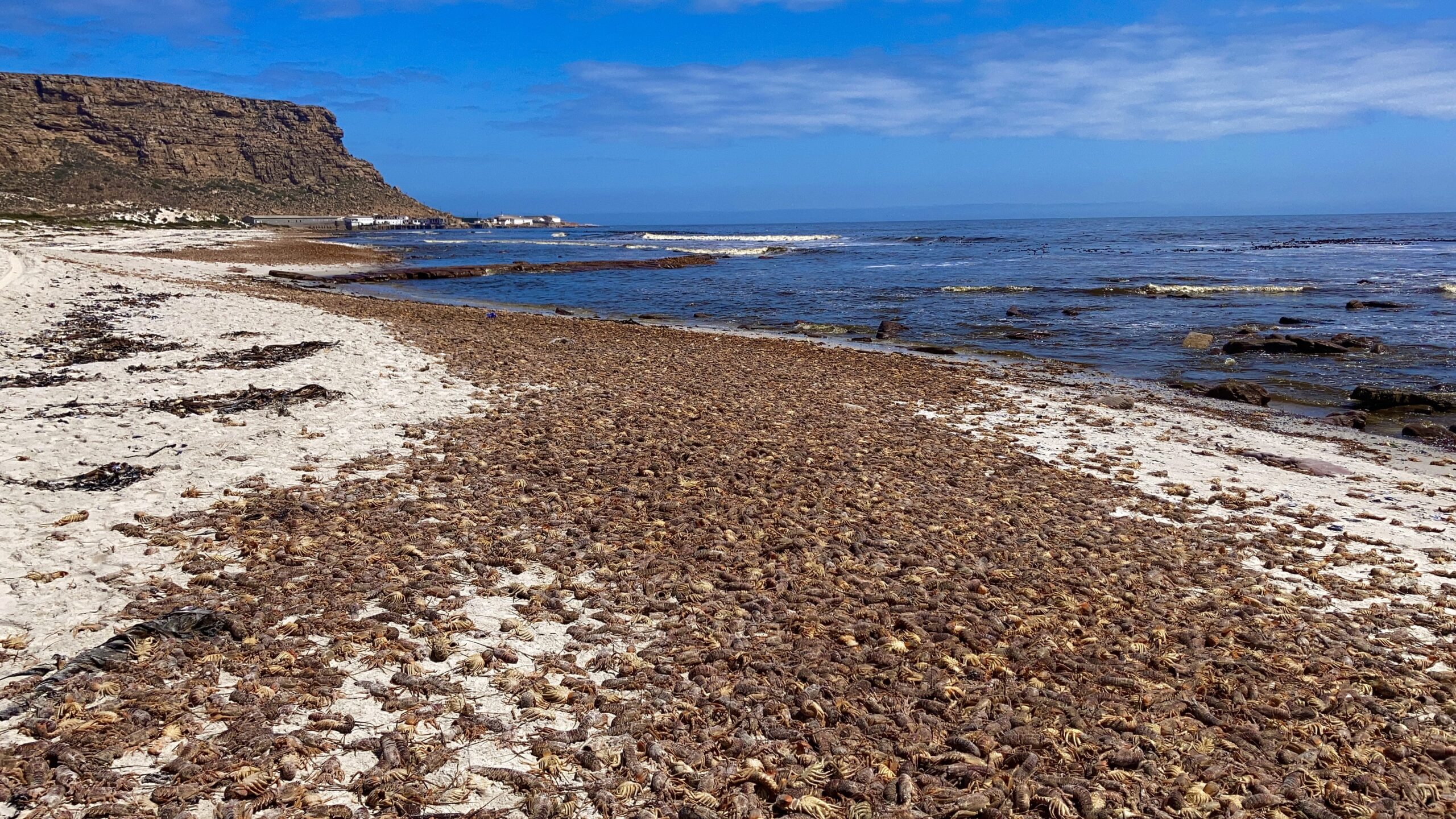
We in the Western Cape have lived through a scenario of a possible ‘Day Zero’, when water supplies were predicted to run dry. Our fire season this year has been extended into an eight-month preparedness time as opposed to four months, and our summer is expected to be scorching. This winter has been unusually balmy with scant water and storm destruction. In the past month, we have watched masses of sardines wash up dead on our shores due to a herpes virus.
Photos by Helen Walne.
A majority of South Africans don’t need a doomsday report or an imminent El Niño to already be living in Day Zeros, fires and economic disparities. They live with hardship every day.
For now, South Africa is coming into this space from a stronger position of food security and soil moisture, which should buffer us through this period. Strong leadership will, however, determine how well this is organised and dealt with.
And that’s the advantage we have in the world today – we have knowledge. We can, up to a point, have forewarnings of what is to come and help save lives. We have the solutions but need the political and societal will for implementations.
We also have a world that is resilient and surprises us with recovery. Previously bleached coral reefs due to El Niños have bounced back. Close to 2,000 new ocean species were discovered across the world in the last two years and populations of Antarctic fin whales and Australia’s humpbacks are slowly recovering.
We are also slowly learning to respect Indigenous knowledge systems – five new marine reserves that opened in July off New Zealand’s South Island are co-managed by the regional Māori tribe Kāi Tahu (Ngāi Tahu) and the Department of Conservation – a first for the country and a model South Africa could look towards. These are just a few examples of this beautiful wonder we live with – they give me hope that we won’t need to be screaming on national television.
In the four hours it took me to write this blog, about 60,000 babies were born – new lives coming into this world with hope. When we opt to focus on economics over people, on short-term gain versus long-term damage and loss, and when we use planetary catastrophe projections, we forget that birthdays are being created every day. Babies will grow up to be nine years old, 24 years old, 33 years old. The day they were born is their day. We owe it to them to make the right choices.
If we acted on the precautionary principle as the centre of all our activities, as it is enshrined in our major treaties – from COP and biodiversity to the High Seas – we could start building this world of hope. We should stop waiting for proof of damage before we act.
Even if we are wrong about the dire predictions and still live using the precautionary principle, we lose nothing and gain a greener world with clean air and water and food security. But if we are right and we did nothing, reel life might become real. And then what world would the babies have?